Do They Really Wear Out? The Latest Portable Power Stations for Disasters Are Actually Meant for Everyday Use
Hi to everyone who turns helpless without power in a disaster — I’m Hide, tech journalist and part-time house-husband. My home is usually super convenient, packed with gadgets that automate the housework, but the moment the power goes out, it’s back to primitive living.
Even short of that, power outages are a pain, right? Big typhoons have already been reported this year, so it pays to be prepared. With portable power stations, people used to worry a lot about the battery wearing out, but with the latest models, better batteries and features mean they don’t degrade even if you leave them plugged in all the time — that’s the new normal.
A lot of older batteries became unusable in under two years, and one of mine died too, so I took another look at the power setup at home.
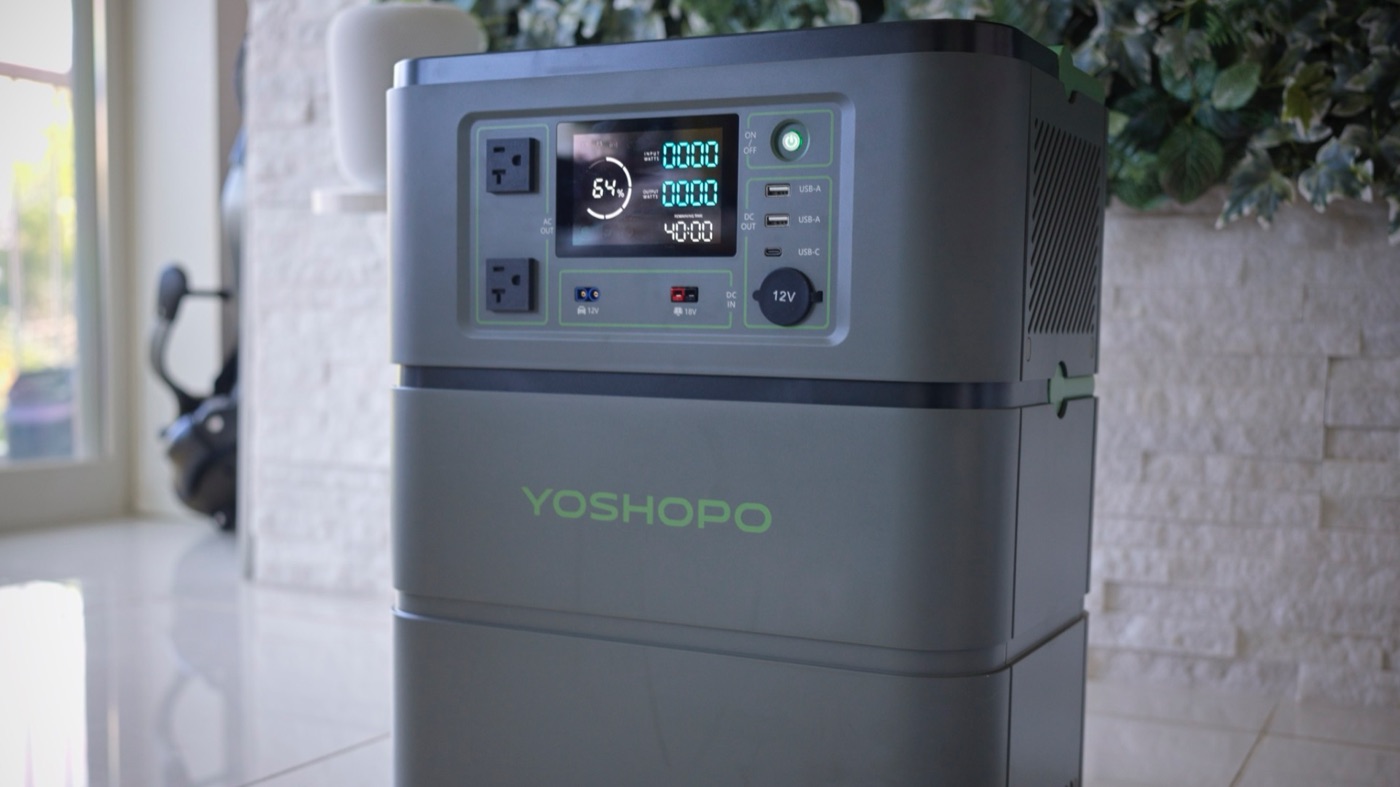
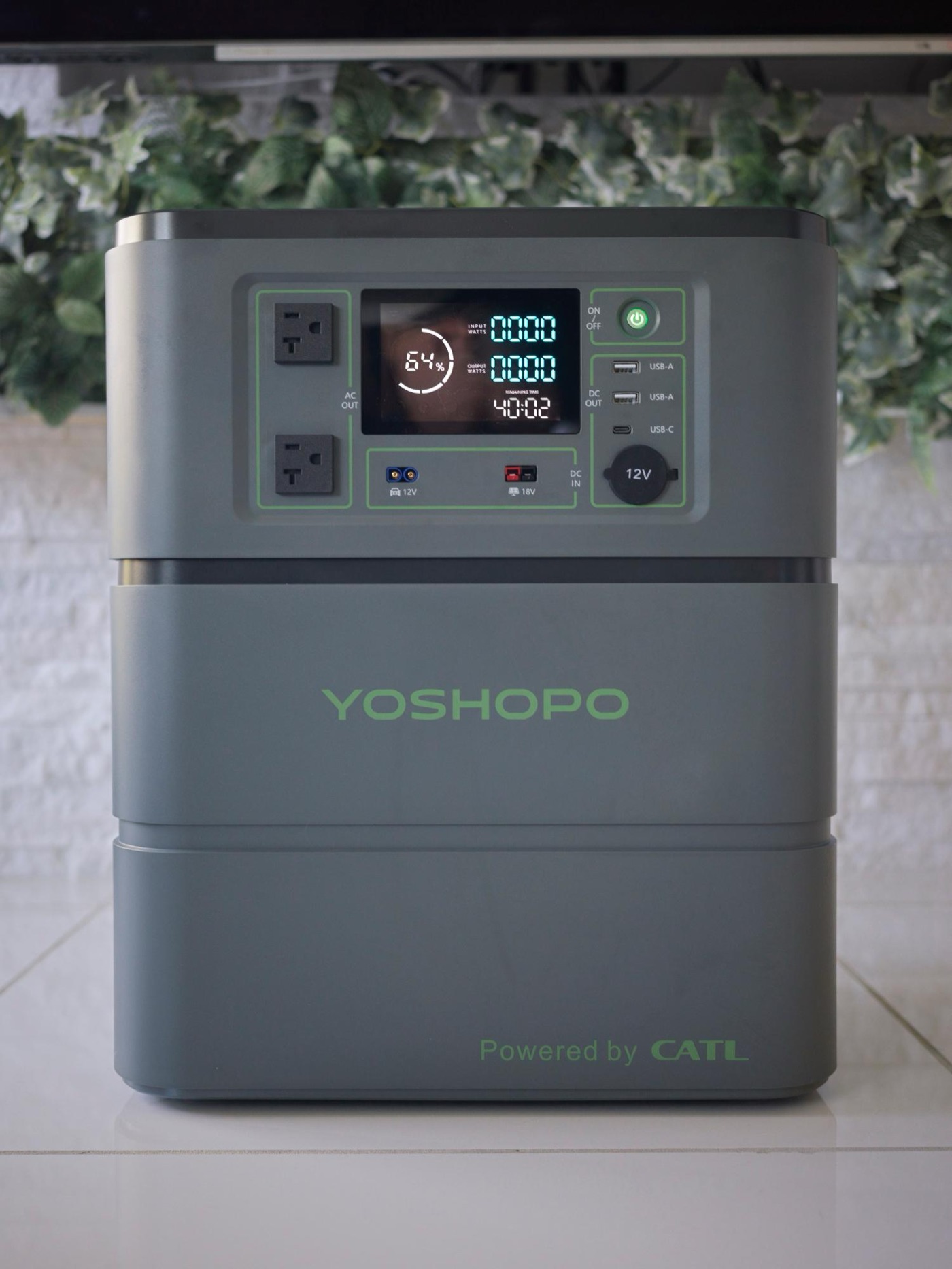
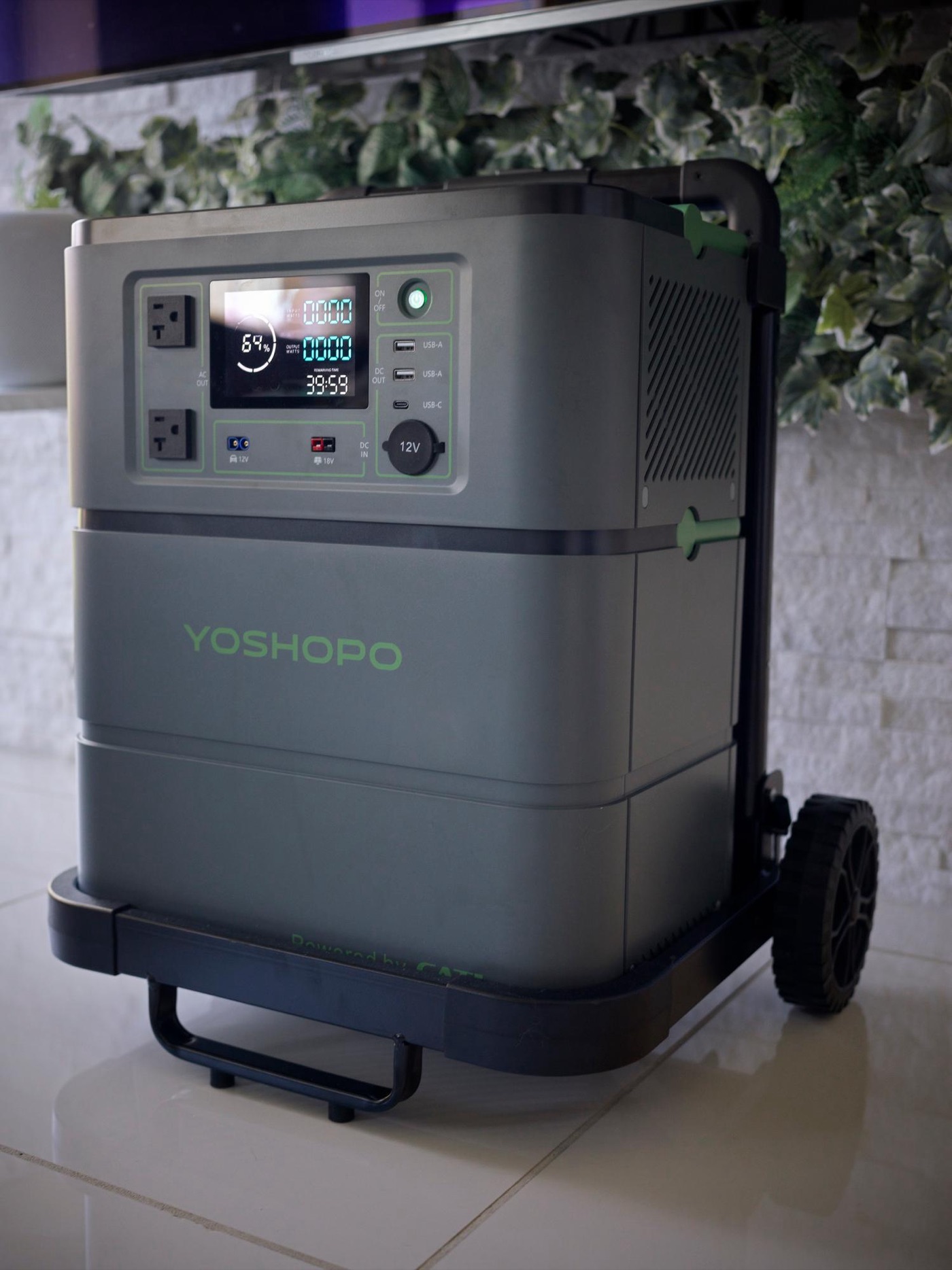
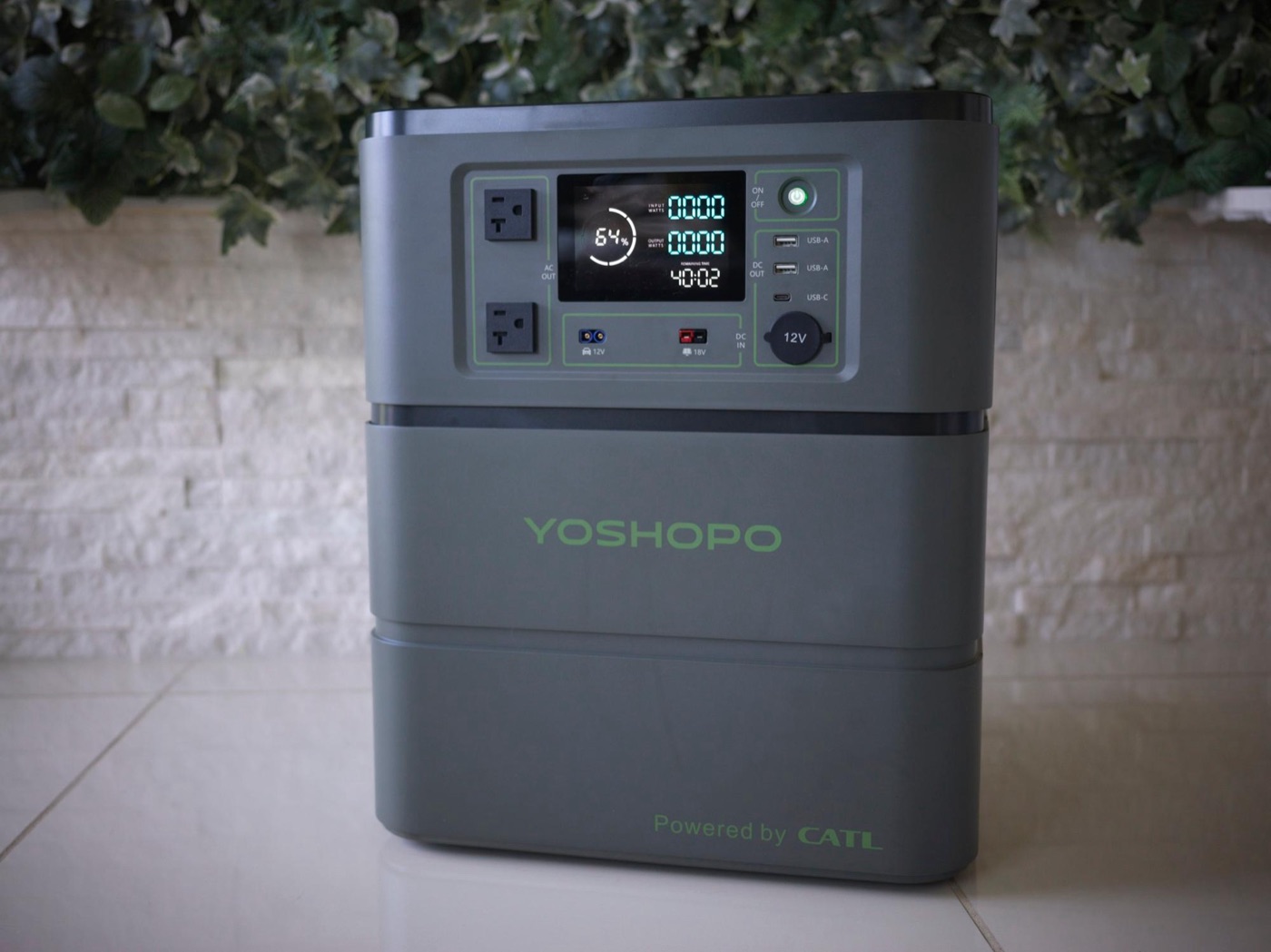
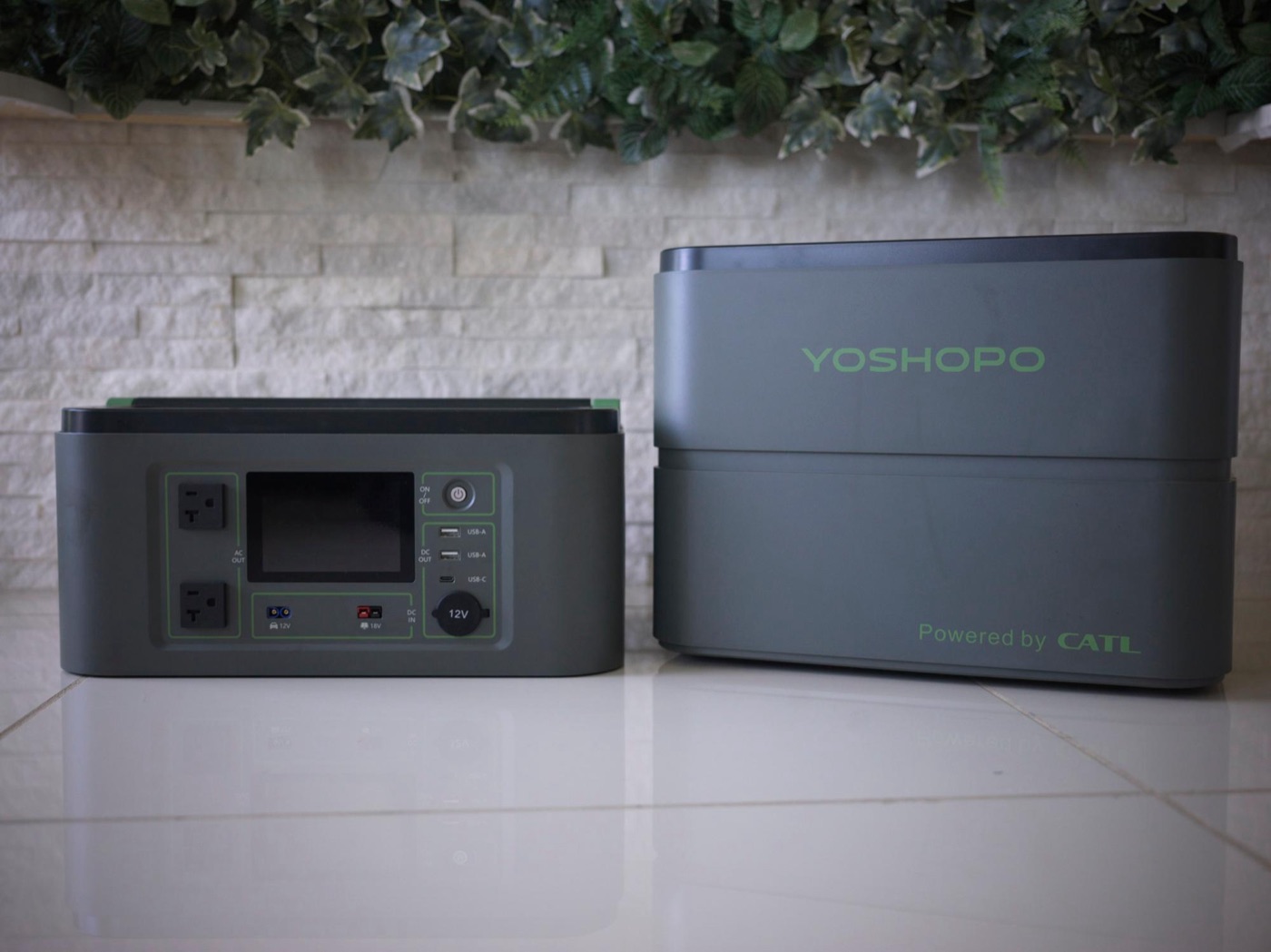
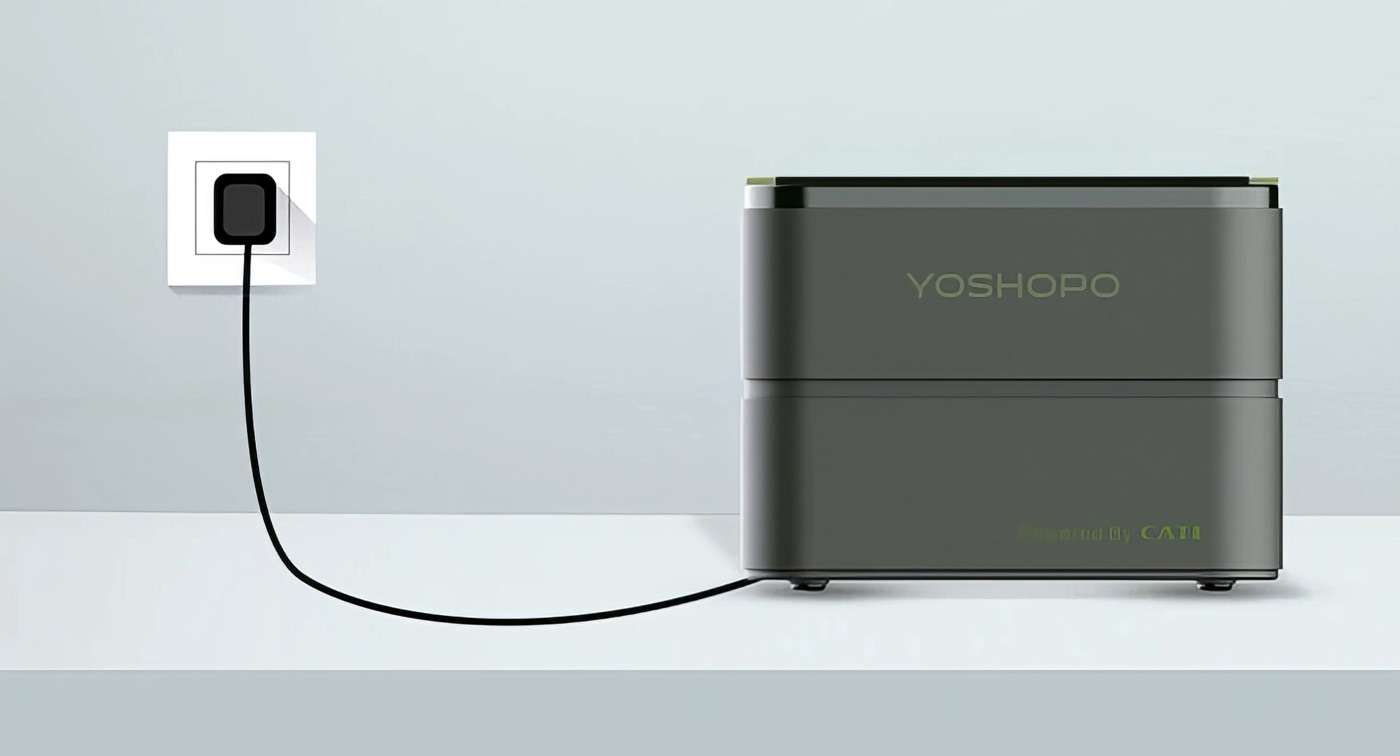
YOSHOPO is shaped to sit easily in place at homeIt splits into top and bottom pieces, so each one is easier to carryWhen taking it outside, you put it on the dedicated cart
## With pass-through charging, it works as a regular wall outlet day to day
I’d been using portable power stations for both camping and home. But in reality they were almost always for camping, and at home they just sat there charging. The common wisdom is that leaving them plugged in is bad — apparently it’s best to leave it once it’s fully charged and recharge when it drops to around 60% — but that’s way too much hassle for a lazy guy like me (lol).
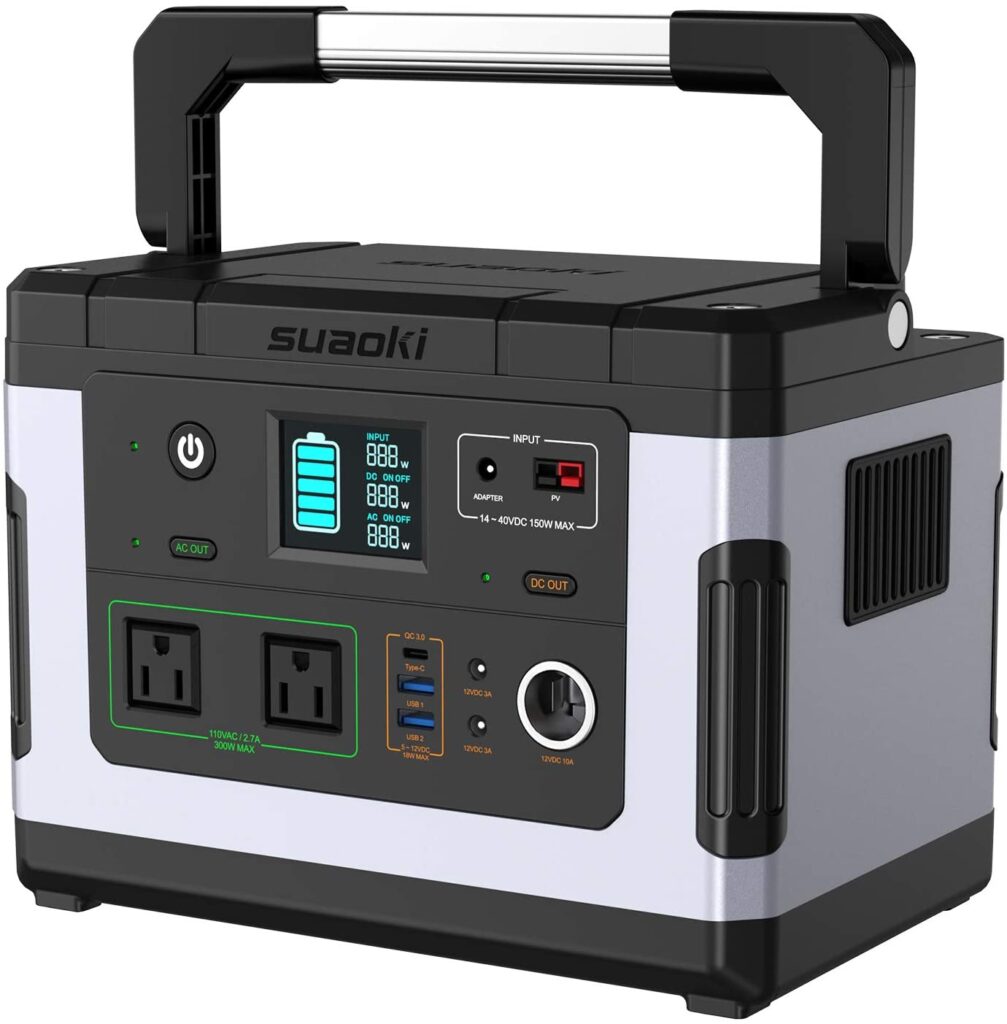
In the end, I left my SUAOKI batteries plugged in, and the smaller one wouldn’t turn on after just over two years. I think it cost about ¥50,000, and having it die after only a few camping trips didn’t sit right with me. “Couldn’t I just use it at home every day instead?” — that’s what got me rethinking things.
The SUAOKI G500 I’d been using
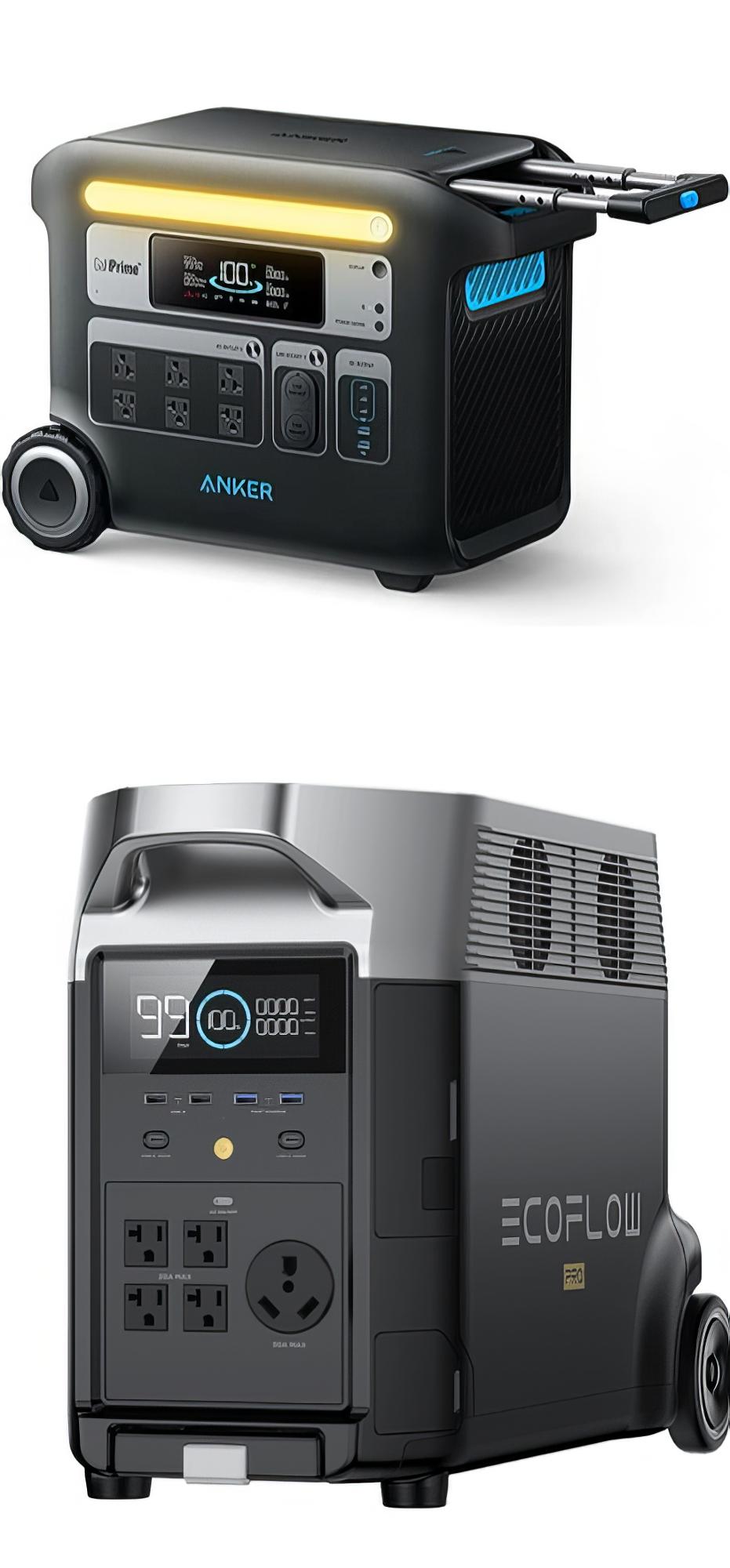
Big names like Anker and EcoFlow are hard to pass up, but they have handles and wheels and are designed to double as something you take out. The YOSHOPO battery I ended up using this time is basically designed to stay put.
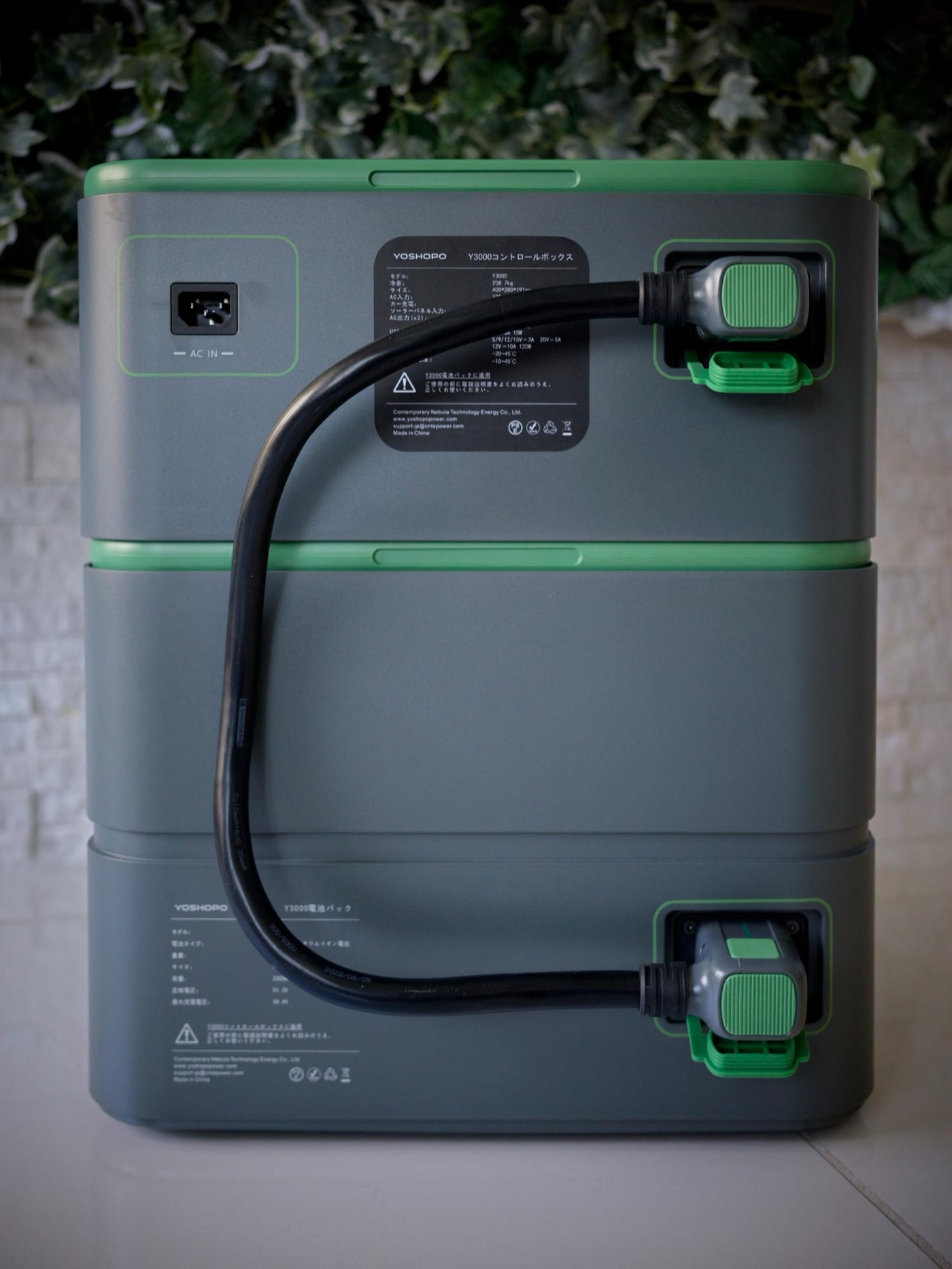
Instead of adding wheels, they split it into a control box and a battery section, which makes moving it around indoors less of a burden. Large-capacity batteries without wheels or handles are rare, so I thought it was great for keeping indoors as emergency power, like I’m doing here.
Wheels and handles can get in the way indoors
And the headline feature is pass-through. If you plug appliances into the front while it’s charging, the circuit switches over so the appliances run without going through the battery. Combined with safety features like overcharge protection, **you can leave it plugged in all the time and use it as one of your home’s power sources!**
Of course, the latest Anker and EcoFlow power stations have pass-through too, but what matters with YOSHOPO is having pass-through in this shape. Putting it in front of a wall outlet like a piece of furniture doesn’t look out of place. It’s a small thing, but the clean box shape fits easily anywhere — small rooms, under a bookshelf, in a car — which is really handy.
With nothing sticking out, it’s easy to place in all sorts of spots
## Extra batteries expand what you can do
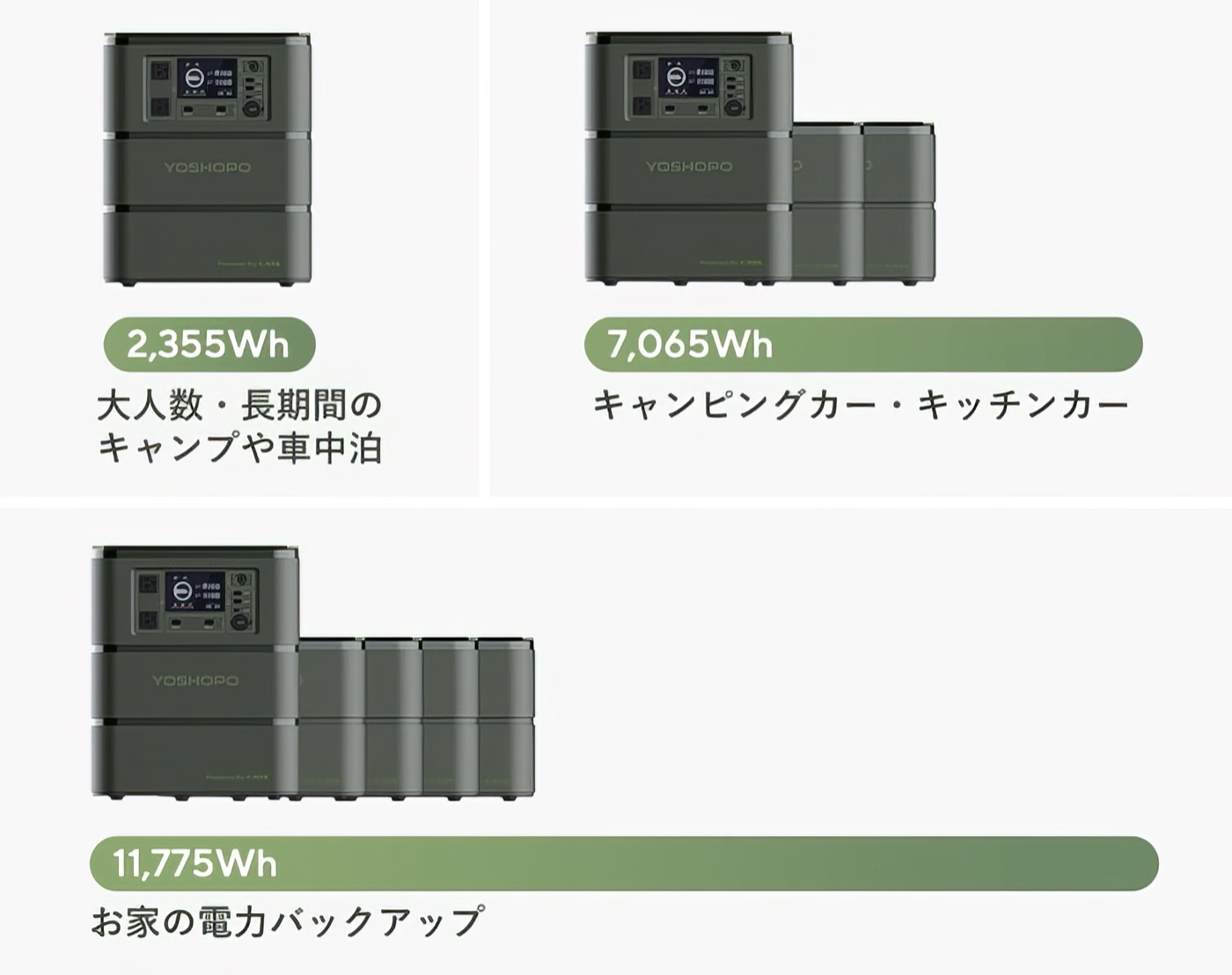
Another feature other products don’t have is that you can buy just the battery pack. Even one pack holds 2,355 Wh — on par with other brands’ most expensive power stations — and you can expand it further by adding more. At this capacity, you’d worry about charging time, but it fully charges in just two hours. When I actually used it and it really did fill up in under two hours, I was pretty amazed.
Separate them and you can easily add capacityYou can add more later as you need — nice
That makes it convenient to expand even if your needs change from what you started with. It also supports 3,000 W continuous and 6,000 W peak output, so it’s perfect for things like events. With other brands, you have to buy a whole extra unit including the control part, so the price difference is big — over ¥100,000. For business use, I think being able to buy just the battery pack is a huge advantage.
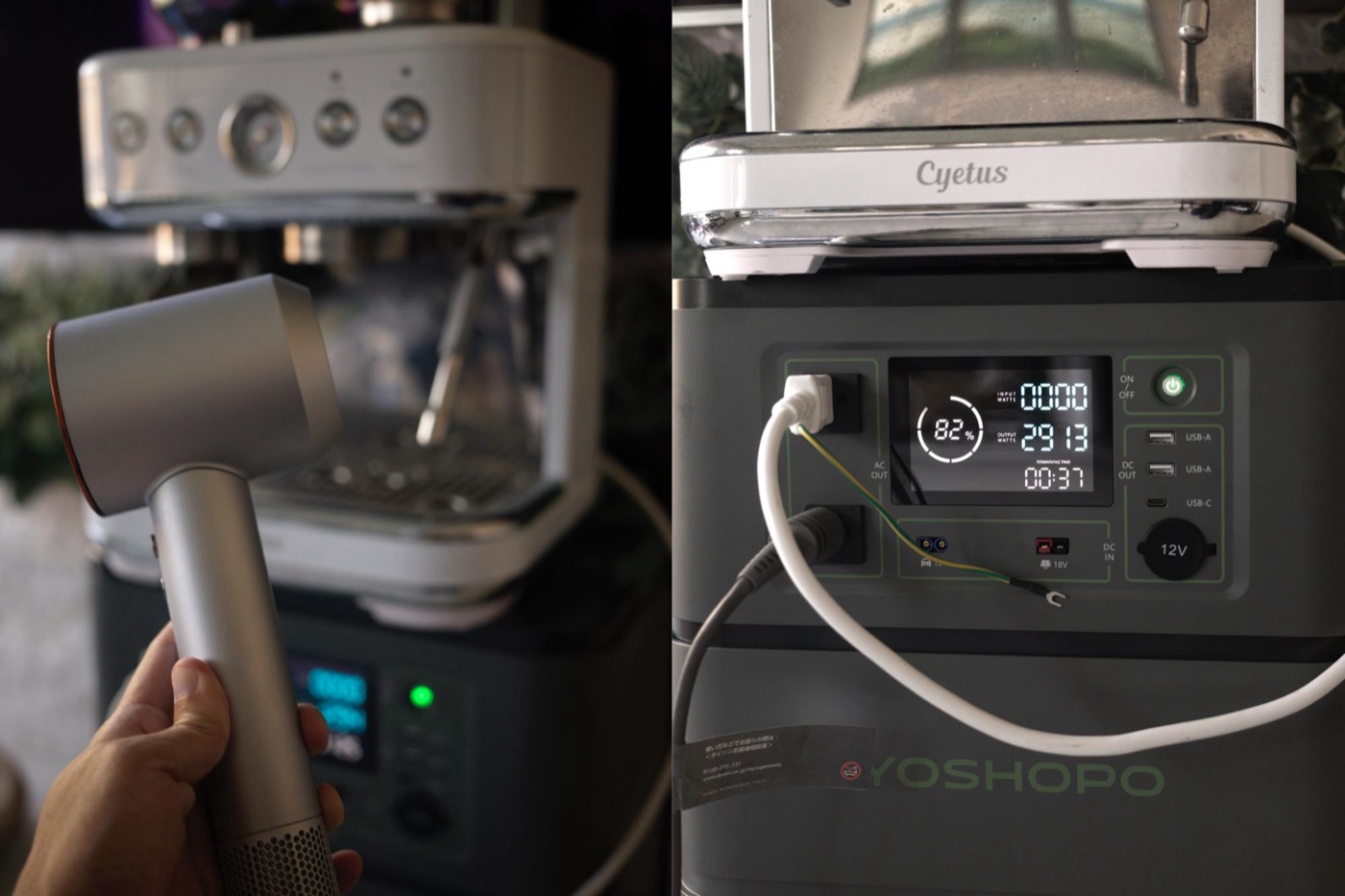
It even ran a hair dryer and an espresso machine at the same time, no problem
The battery packs can be charged on their own — really well thought out. You could change how many you bring depending on how many nights you’re camping, or keep them in a camper van with one spare always charging at home — this design opens up all kinds of uses.
Being able to charge them on their own is quietly handy too
## Flexible in a disaster, too
YOSHOPO also has an uninterruptible power supply (EPS) that switches to battery automatically during an outage, and it uses the latest lithium iron phosphate batteries rated for 6,000 charge cycles — it hardly leaves any gaps.
If a disaster does happen, you can keep using it at home if you’re able to stay, and if you drive near an evacuation center and sleep in the car, this shape takes up minimal space and leaves room for other stuff.
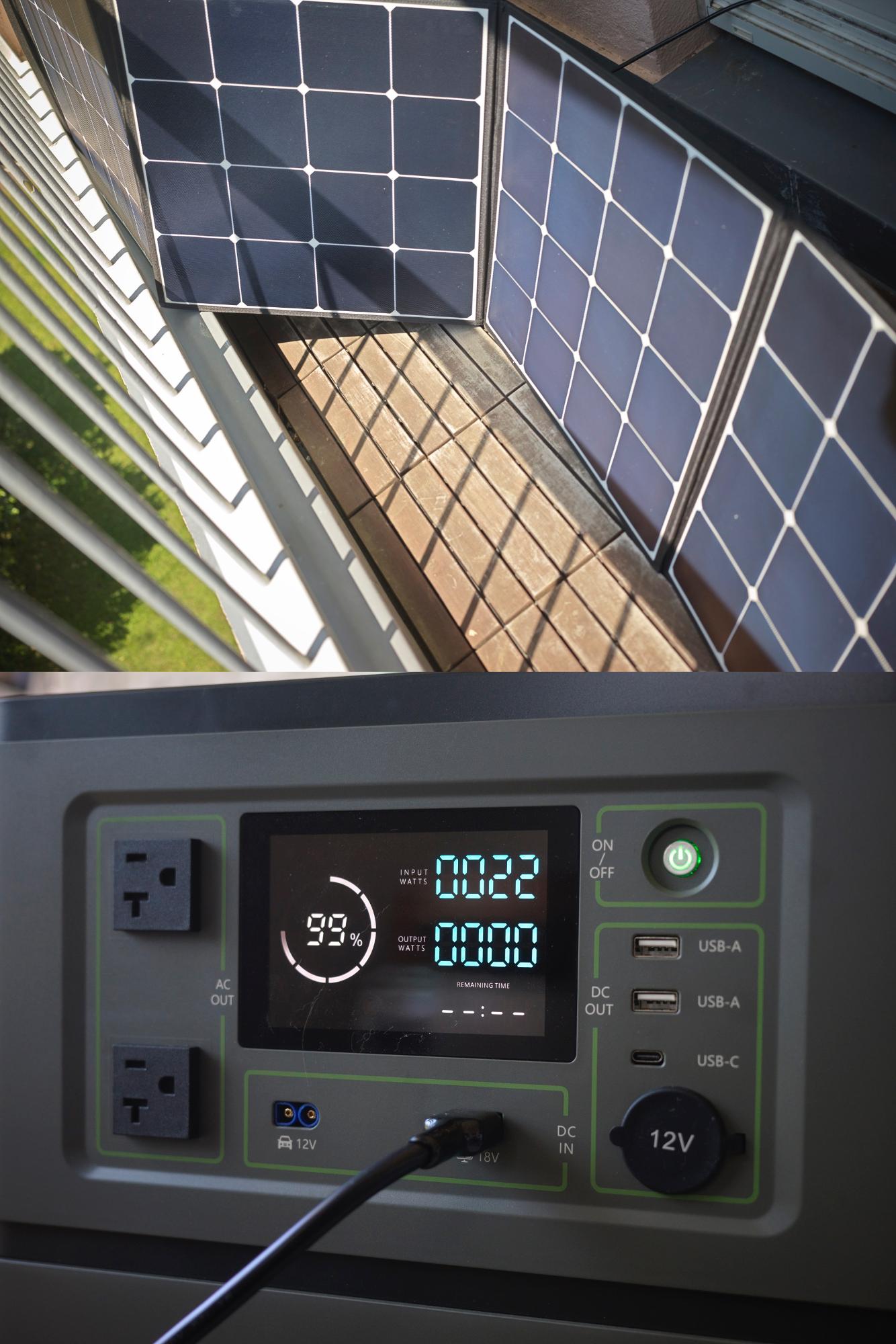
You can charge it with solar panels too
By the way, one cycle counts as going from empty to full, so topping it up from slightly low doesn’t count. If you keep it plugged in day to day, it looks like you can use it worry-free for a really long time.
The solar panel and connector placement are a bit of a letdown
One small complaint is the solar panel’s charging efficiency. The highest I measured was 60 W, so it felt like it takes a bit too long. Other brands’ panels might work, but I’d rather use the official one, so I’m hoping they release a higher-efficiency model, like a bifacial panel.
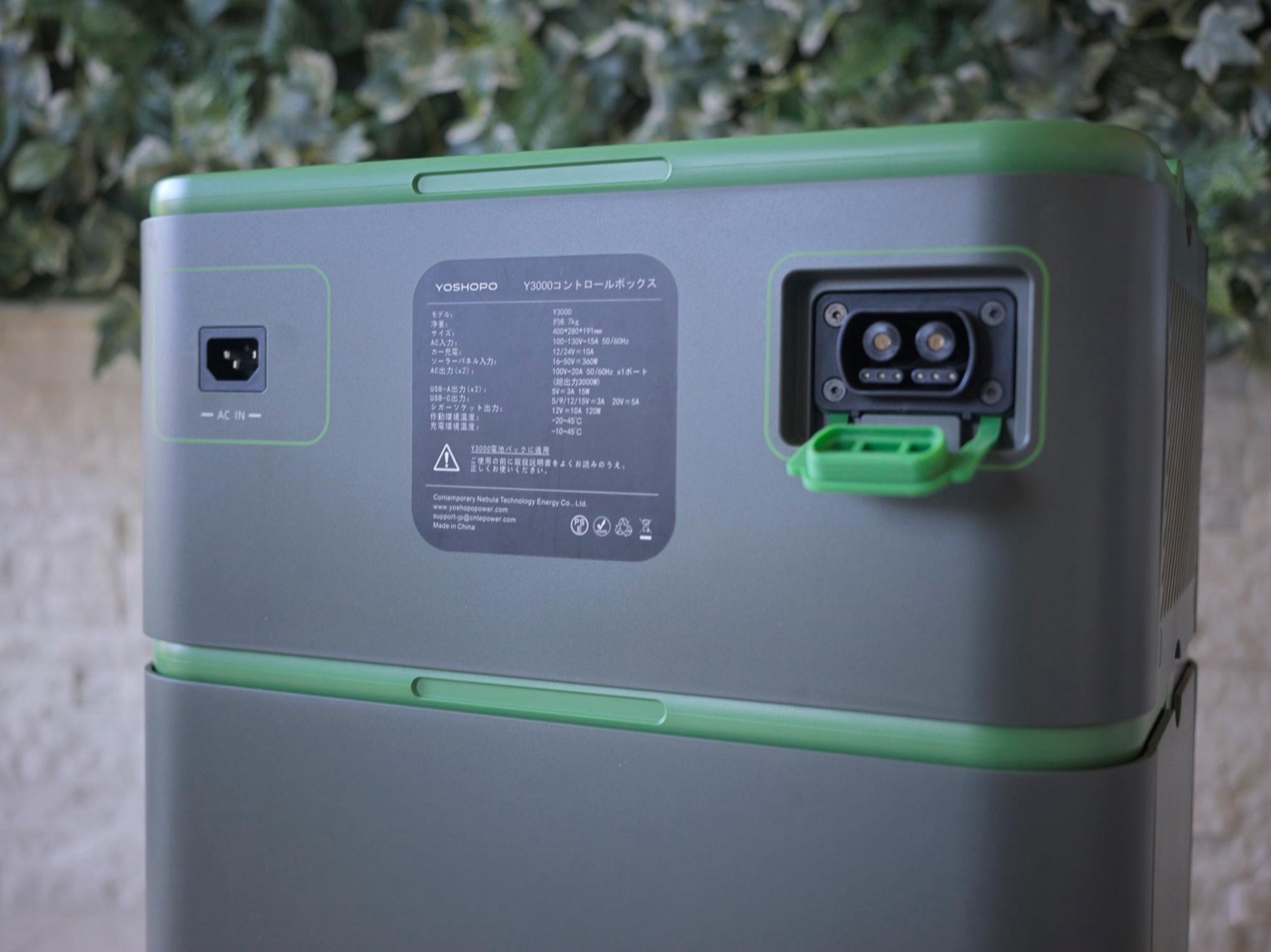
The connector position might bother some people
The position of the connectors that link the batteries is also inconvenient. On the back, you can’t unplug them when it’s pushed up against a wall, so ideally the units would have connectors on each other and connect just by stacking. If the solar panel connector were on the side instead of the front, it’d be easier to connect at home too. I’m hoping the second generation addresses these.
That said, at under ¥400,000 retail, this capacity and functionality make it perfect as backup power at home. I use it alongside an EcoFlow RIVER 2 Max (512 Wh). For example, when I want to use a small power tool or cleaning appliance somewhere without an outlet, I grab the light RIVER 2 Max, and for home emergencies, it’s the YOSHOPO. I got the peace of mind of knowing I can run anything in the house if something happens.