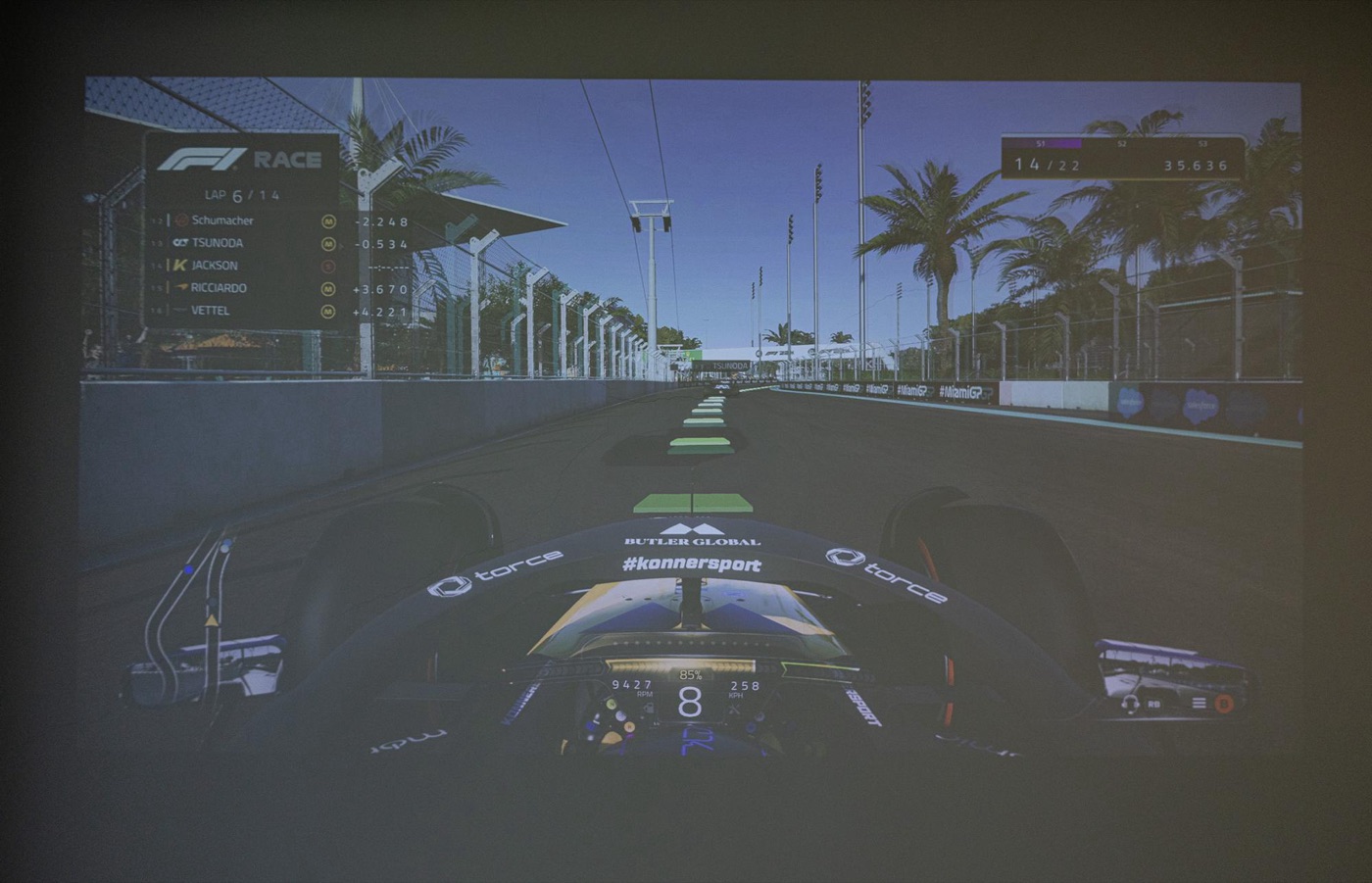
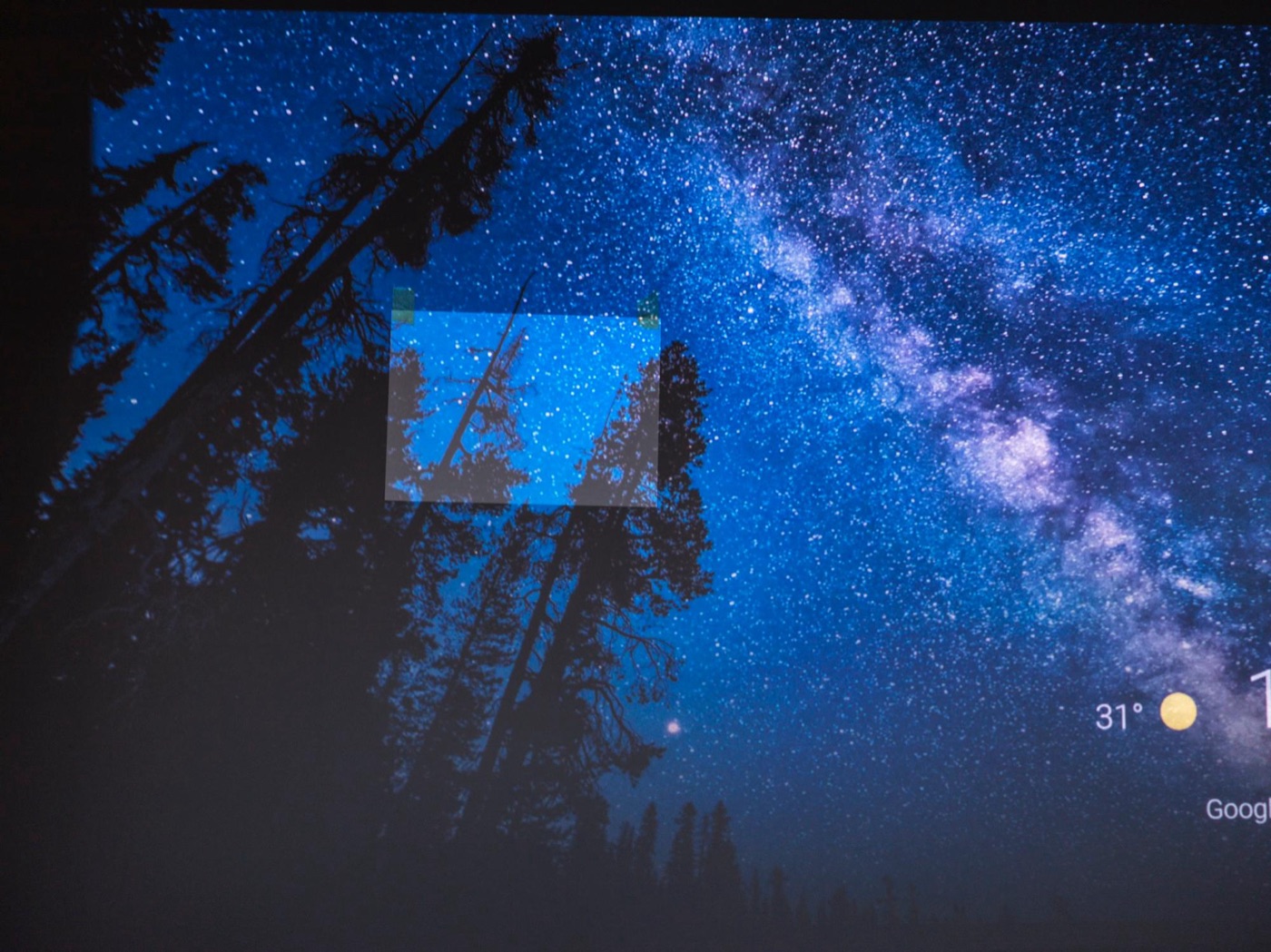
A White Screen Is a Mistake for Projectors? This Motorized Screen Keeps Blacks Deep Even in Bright Rooms
Turns out “the whiter and cleaner the projector screen, the better” was just an assumption.
Hi, I’m Hide — tech journalist and part-time house-husband. When I heard there are screens that reduce ambient light, I thought, “A projector you can use in a bright room? That’s a game-changer!” — so I tried one.
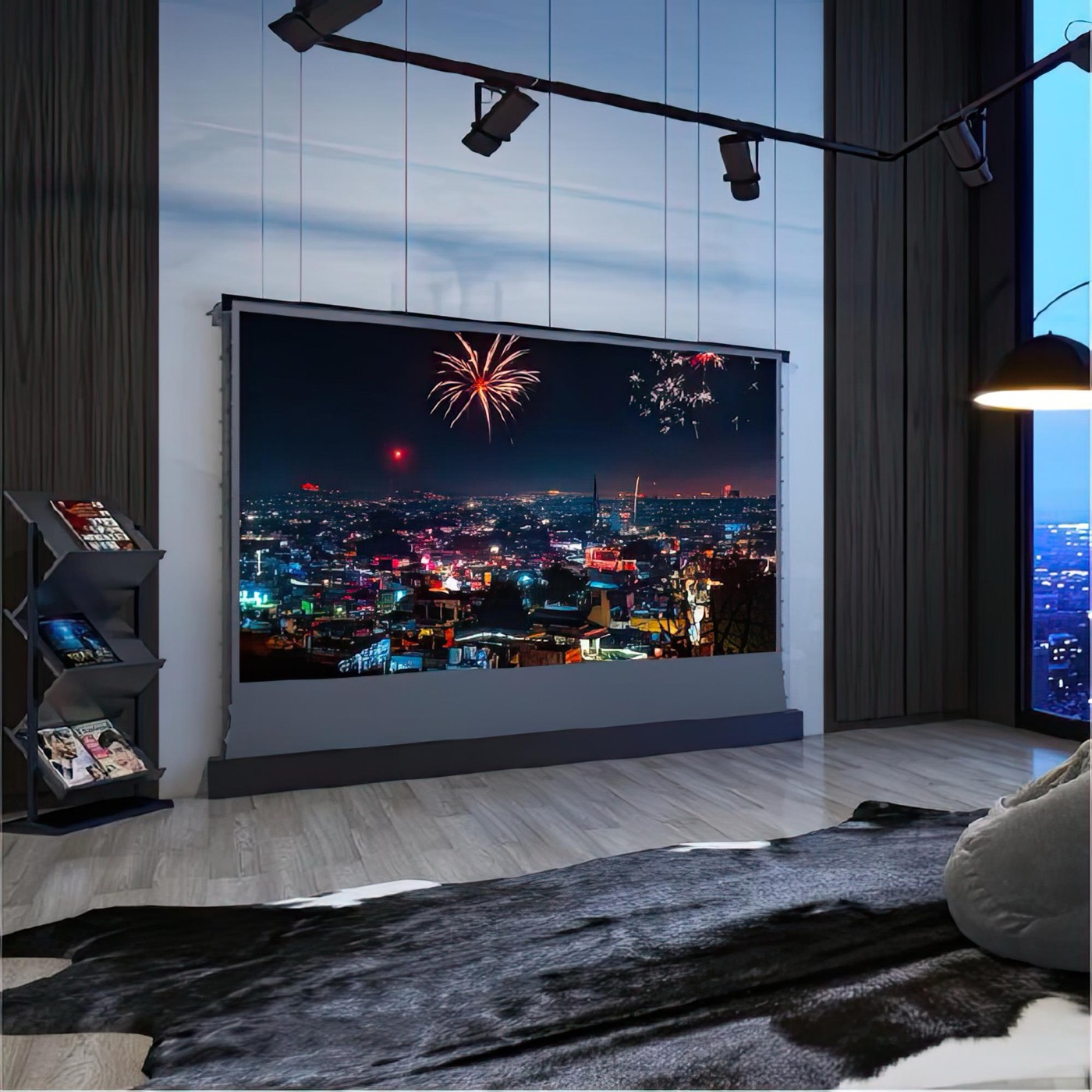
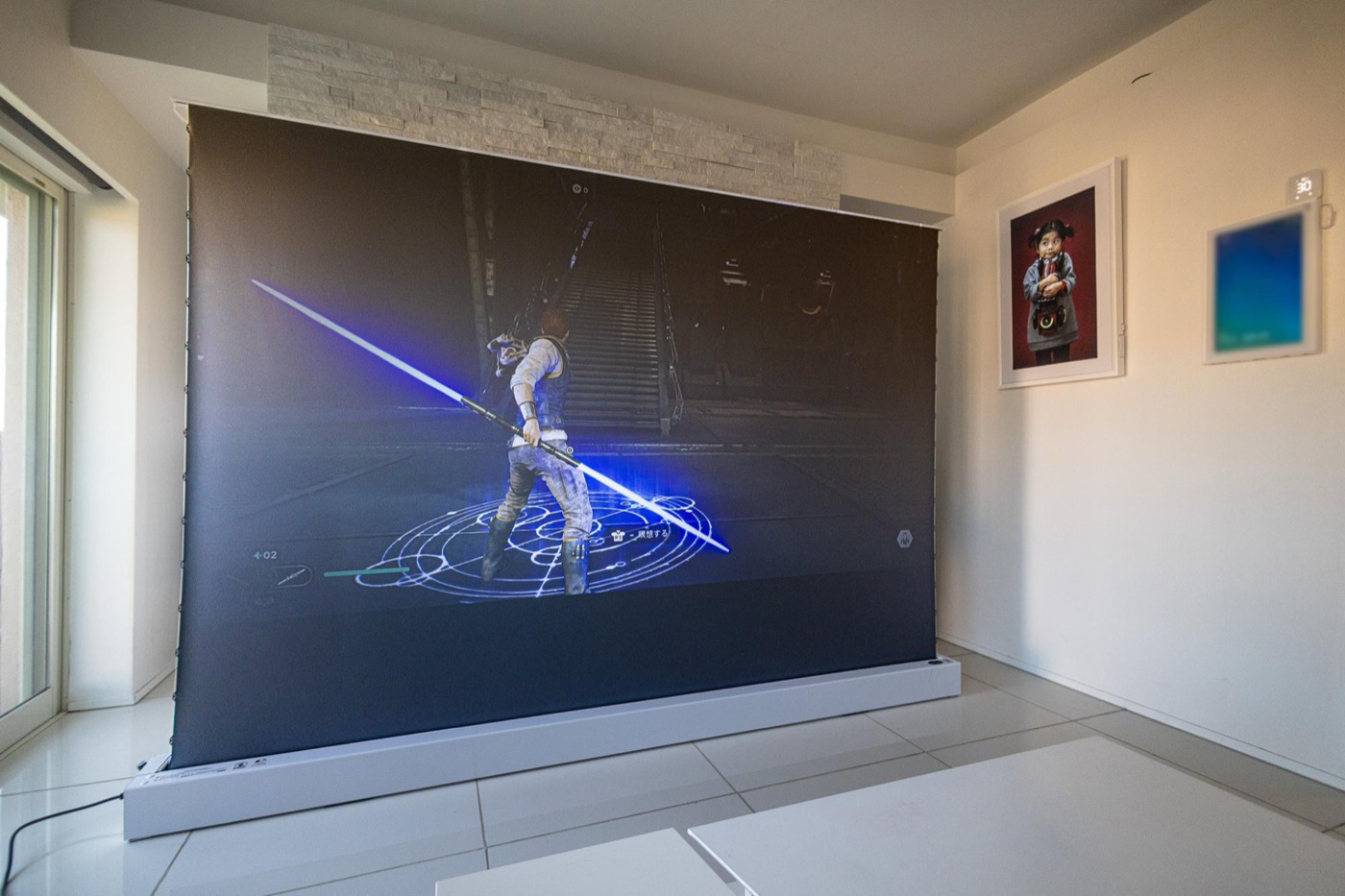
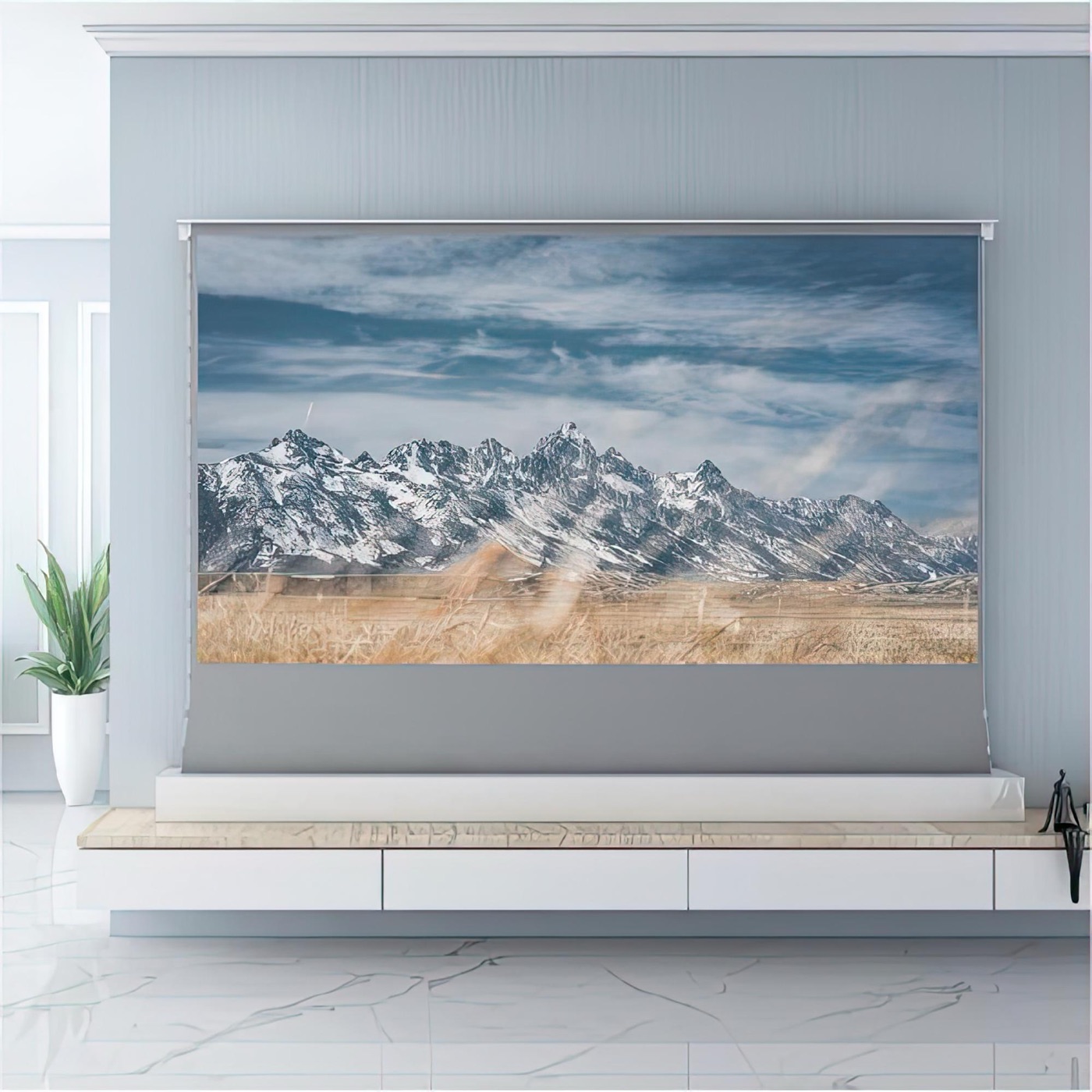
A motorized screen that pops up from the floor — you don’t see many of these
The maker is VIVIDSTORM, which is pretty famous overseas. What’s impressive is how many screens you can choose from: besides the ambient light–reducing type I’m covering here, there are ambient light–rejecting types, ones just for ultra-short-throw, ones for long-throw, and more, so you can pick the screen that looks best with your type of projector.
They also offer setups beyond ceiling mounts — floor-standing, and motorized at that — which you can’t get from Japanese makers. I really liked that.
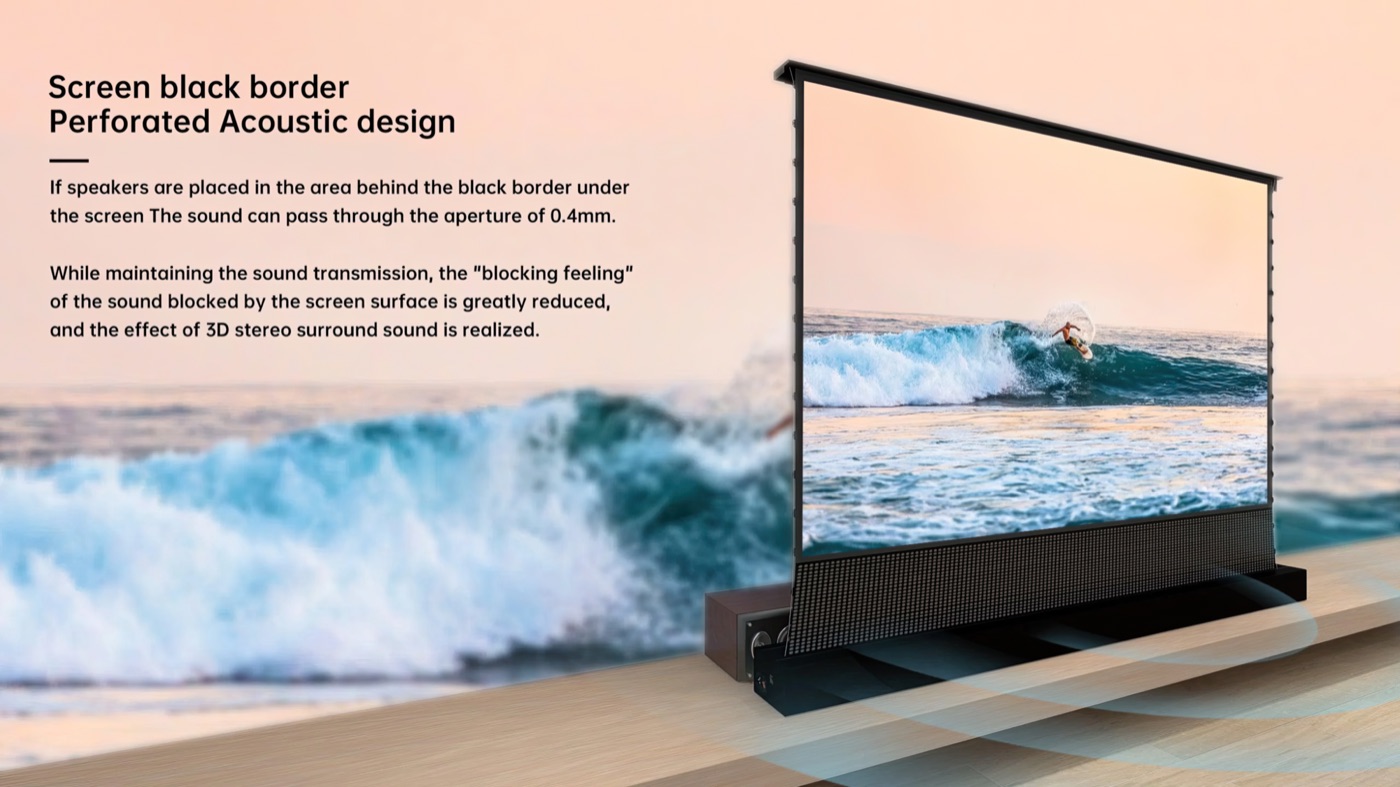
Some models have mesh at the bottom so sound passes through even with speakers behind the screen. Lots of installation options — not something you see much from Japanese products
**For my articles, I sometimes receive products on loan or as samples from companies, within the bounds of Yahoo! News’ rules. However, if a product doesn’t meet my standards for writing about it after actually using it, or if its downsides significantly outweigh its good points, I return it and don’t write about it. I don’t receive any payment from companies.**
A product focused on how the screen reflects light
If the same projector looks different depending on the screen, you’d want a good one, right? What makes VIVIDSTORM great is that it controls reflection through the screen material, which boosts the projector’s performance.
With the weak yen, a 100-inch screen is pricey at just under ¥170,000, but since it improves picture quality and convenience without replacing your projector, I think it’s worth the investment.
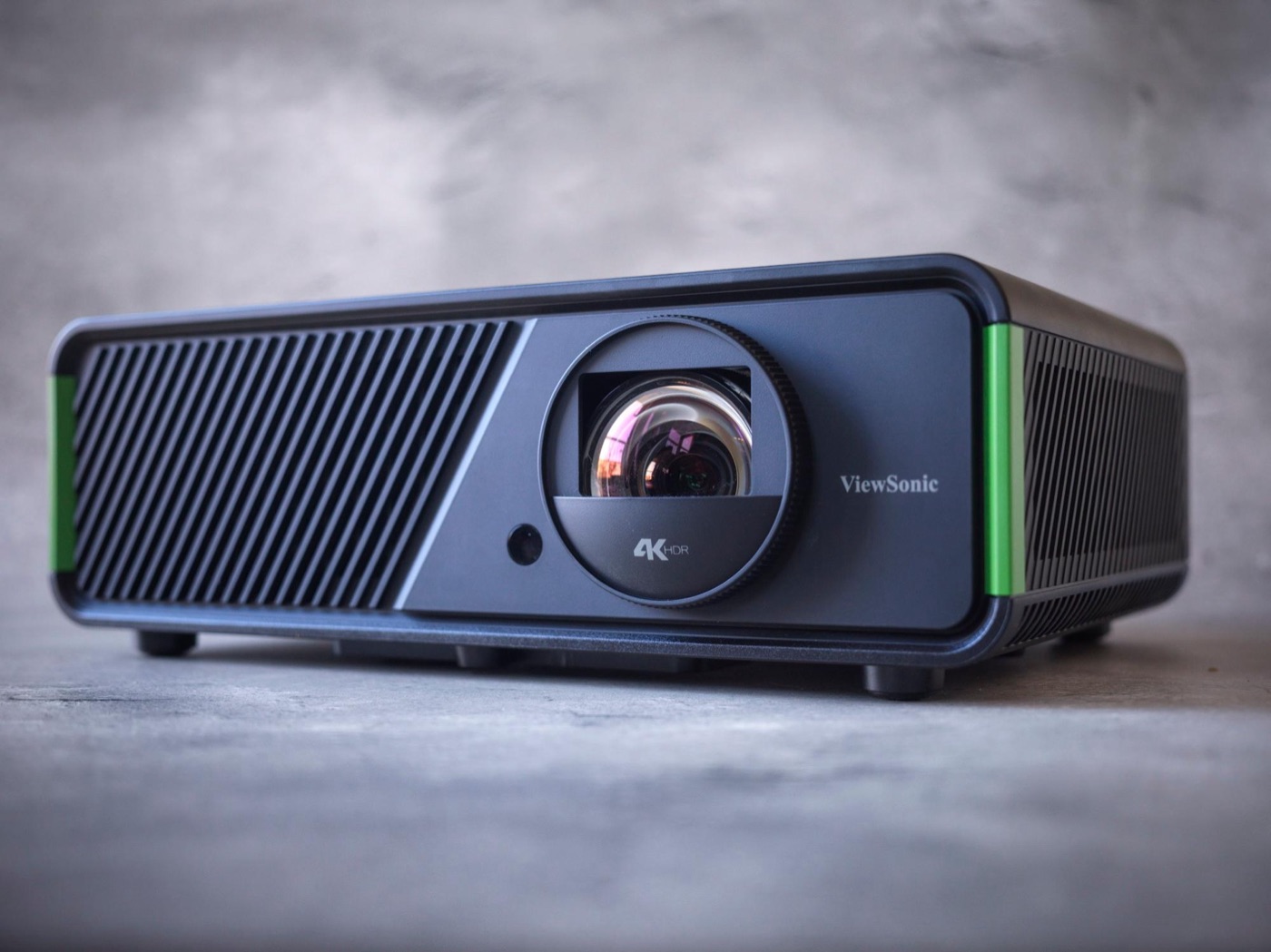
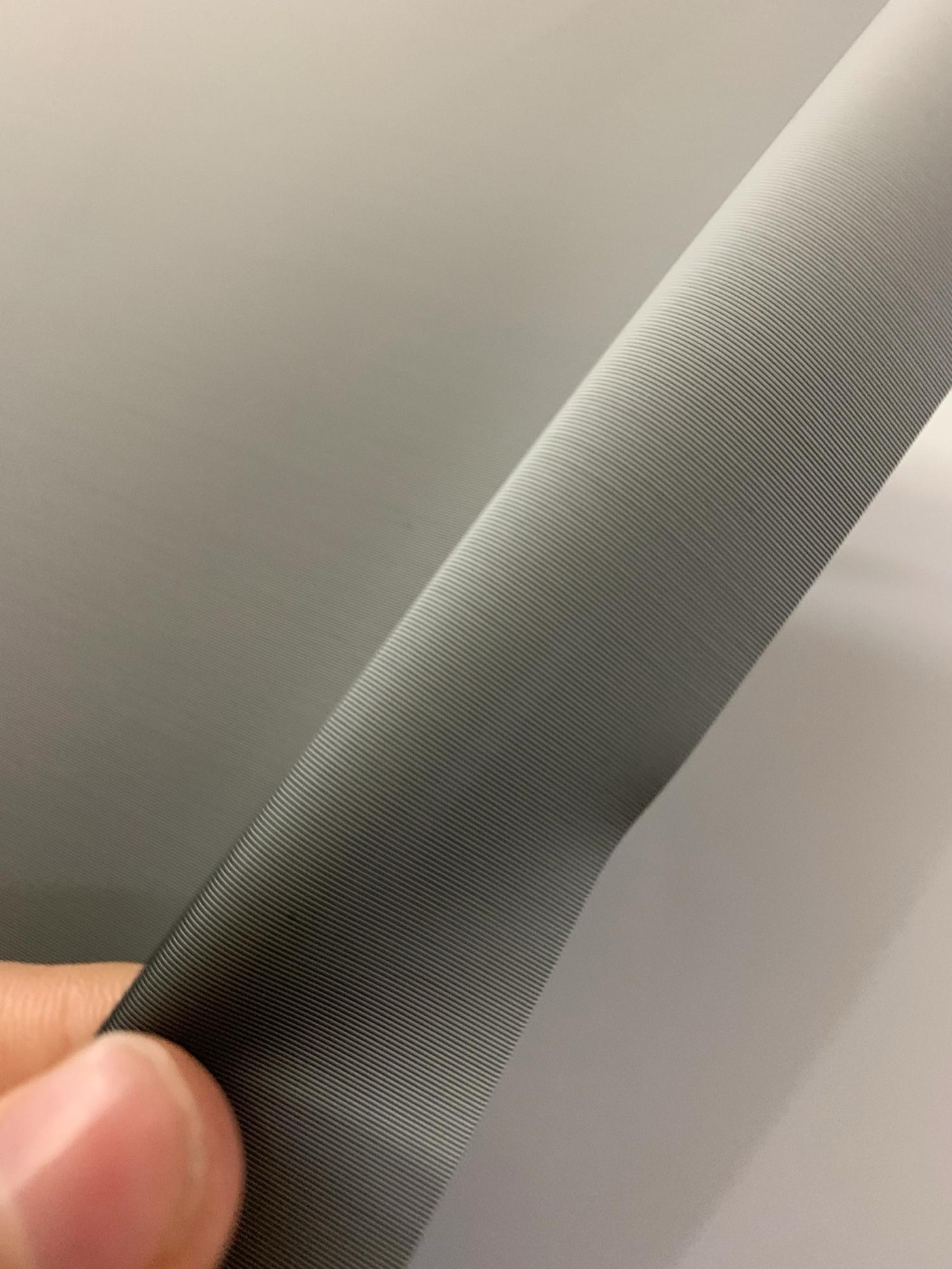
The projector I used is a fairly bright 2,150 ANSI lumens but has a longer throw than an ultra-short-throw, so I went with the matching “ambient light–reducing” screen. The material is gray, which reduces the effect of ambient light (blacks look deeper than on a white screen).
The ViewSonic X2-4K I used for testing
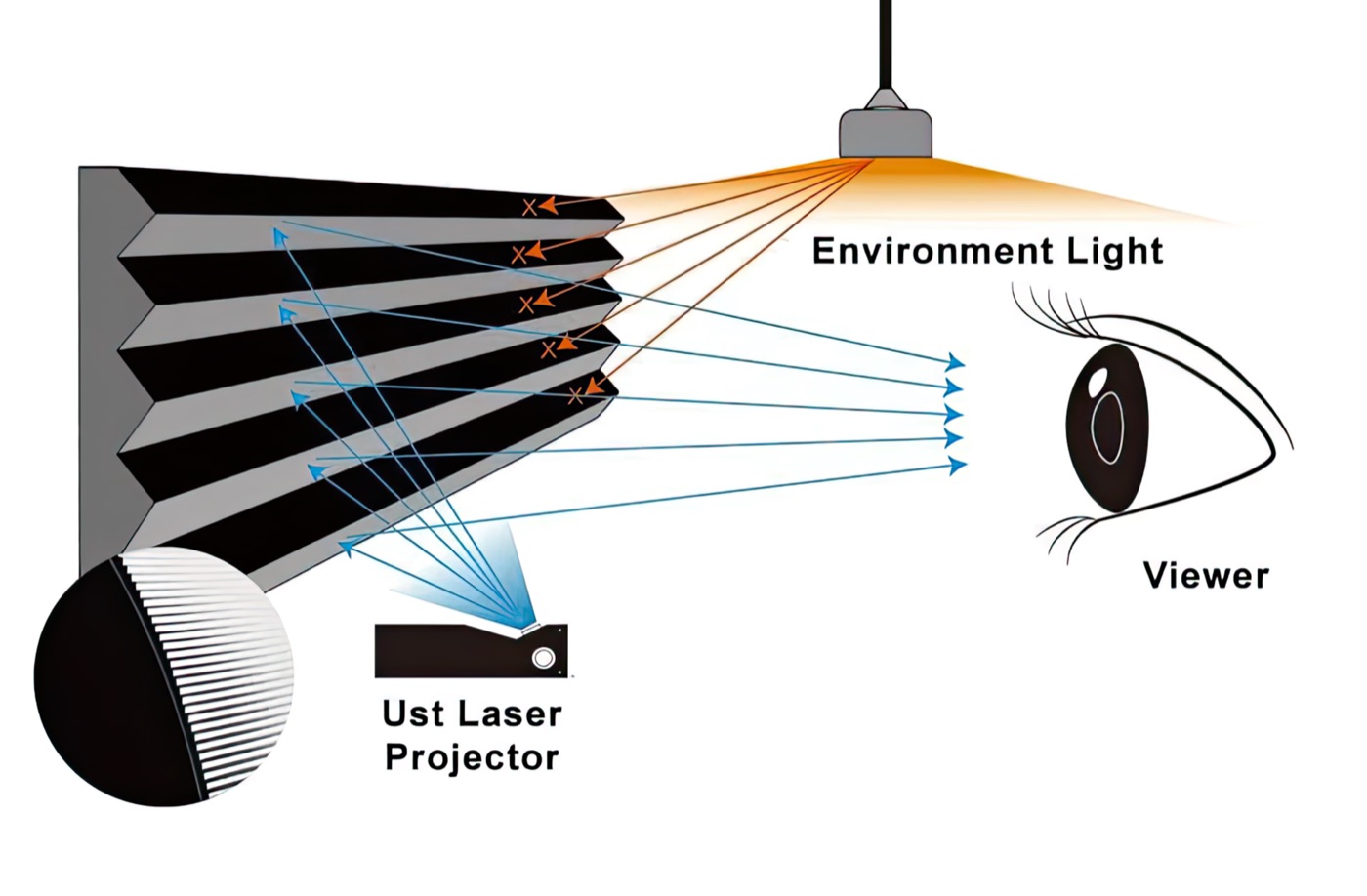
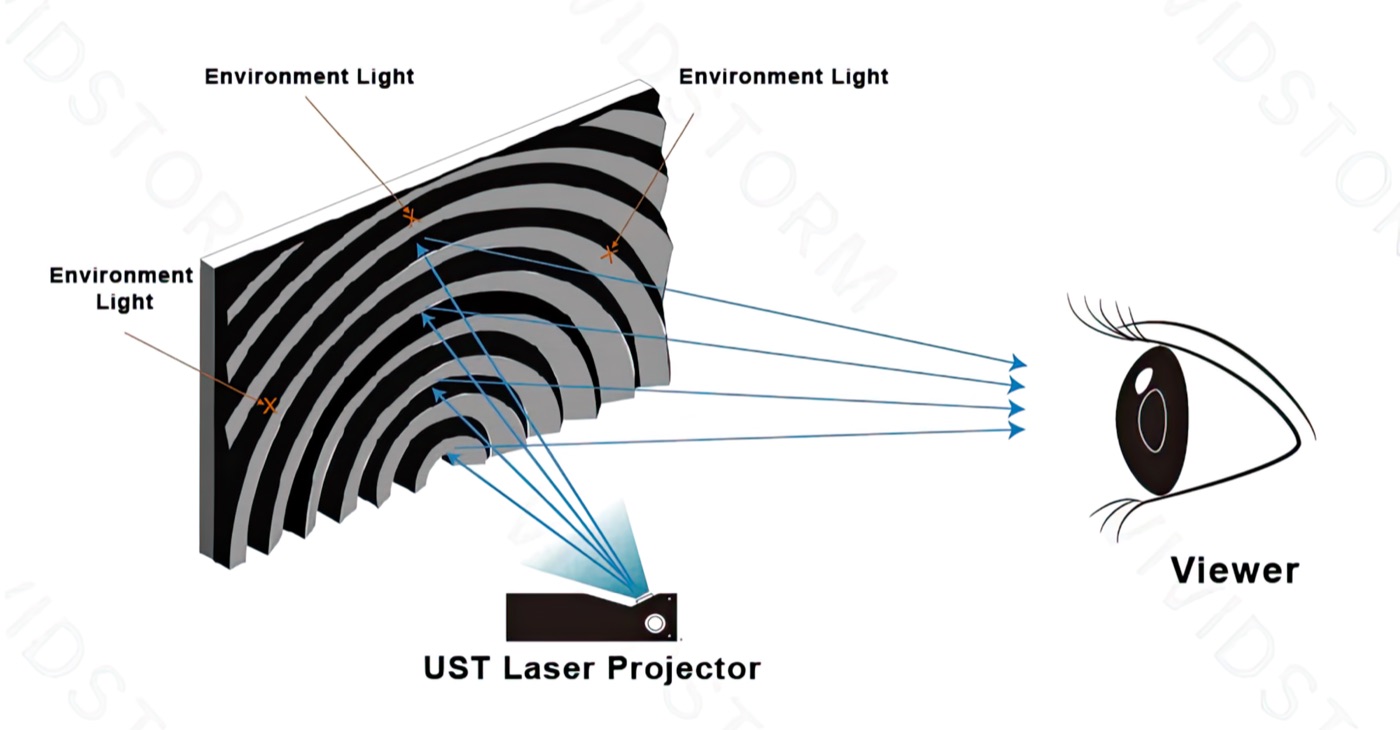
This ambient light–reducing screen can cut about 75% of ambient light when the light source is far away and the light is soft.
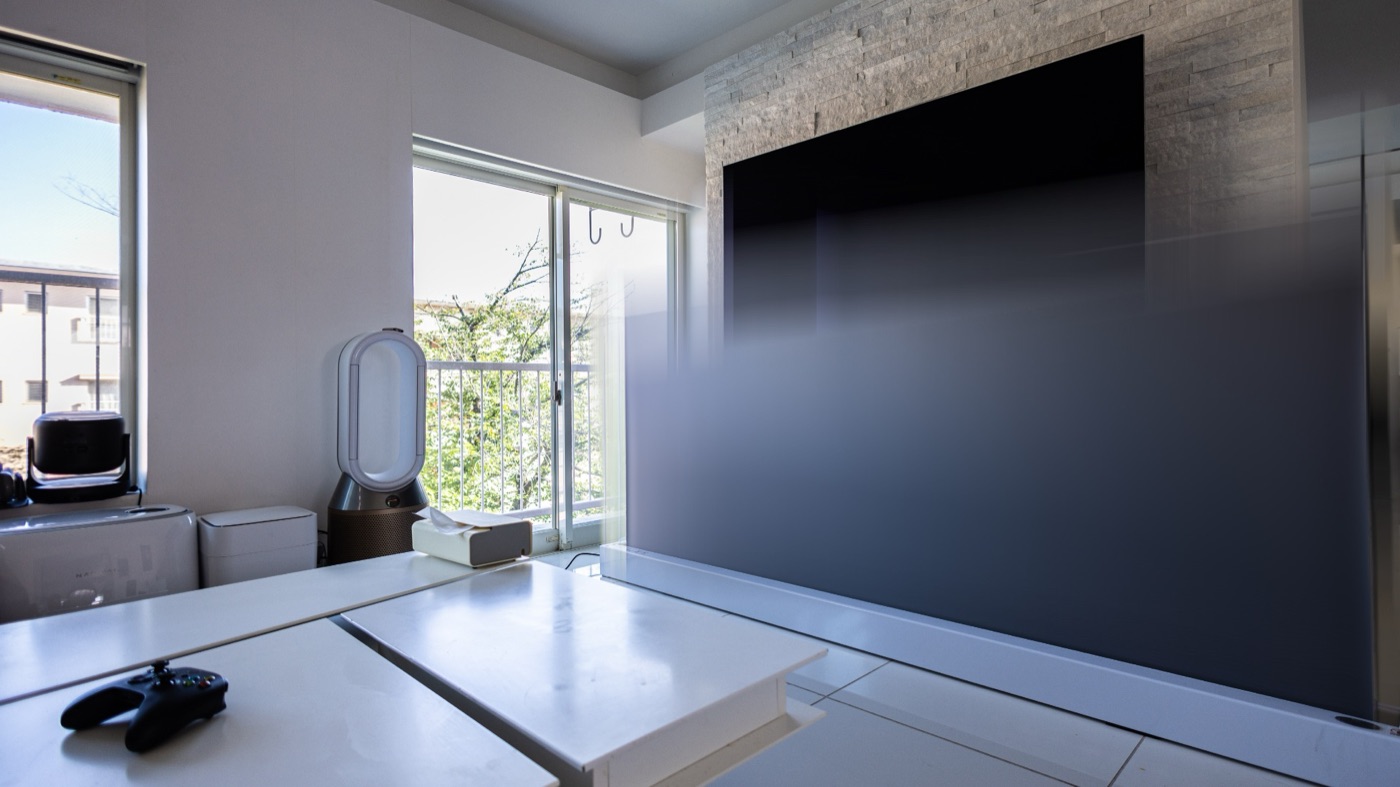
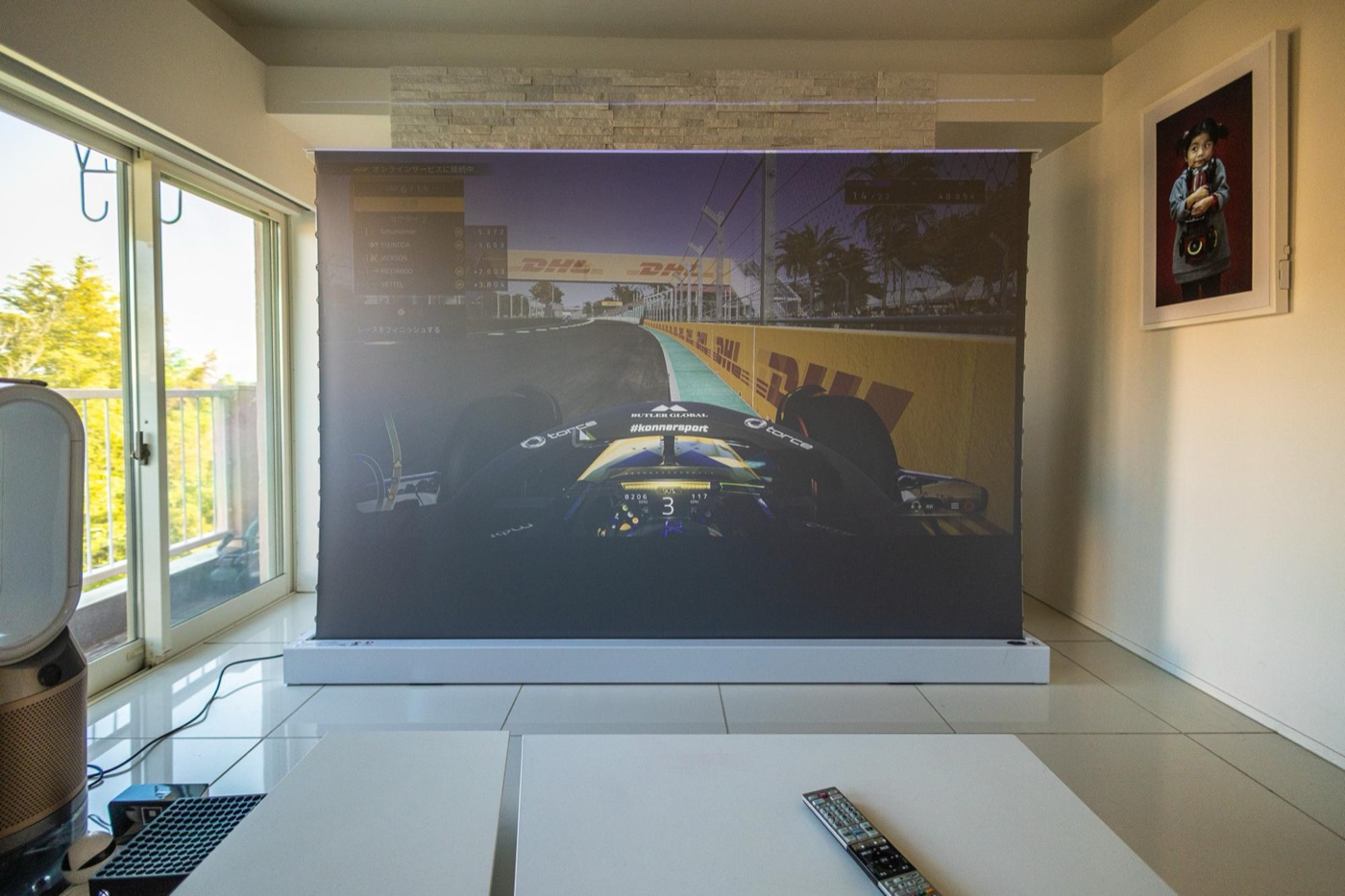
I deliberately tested in bad conditions, but personally I think it still looked pretty good
When light hits from the left like this, it can’t perform at 100%, so you need to get a little creative. Sheer curtains or moving it away from ambient light makes a big difference. If that’s hard, putting it with the light behind you works too.
Set up with the window behind it — even with the room bright, the picture is plenty satisfying
And if you have a brighter laser projector or an ultra-short-throw projector, there are options even more resistant to ambient light.
For ultra-short-throw projectors, for example, you can cut 90% of ambient light — higher than this product’s 75%. That’s enough to enjoy a clean picture at night with the lights on, as long as the light comes from above.
Depending on your projector, you can choose a material that only reflects light coming from below
And while installation options are limited, the CineVision Pro series blocks ambient light from above and both sides for a clean picture.
Blocks ambient light from three directions: above, right, and left
Being able to pick from this many options to match your projector and improve picture quality and viewing conditions is the biggest advantage of VIVIDSTORM products.
For best picture in bright rooms, OLED or Mini LED still wins
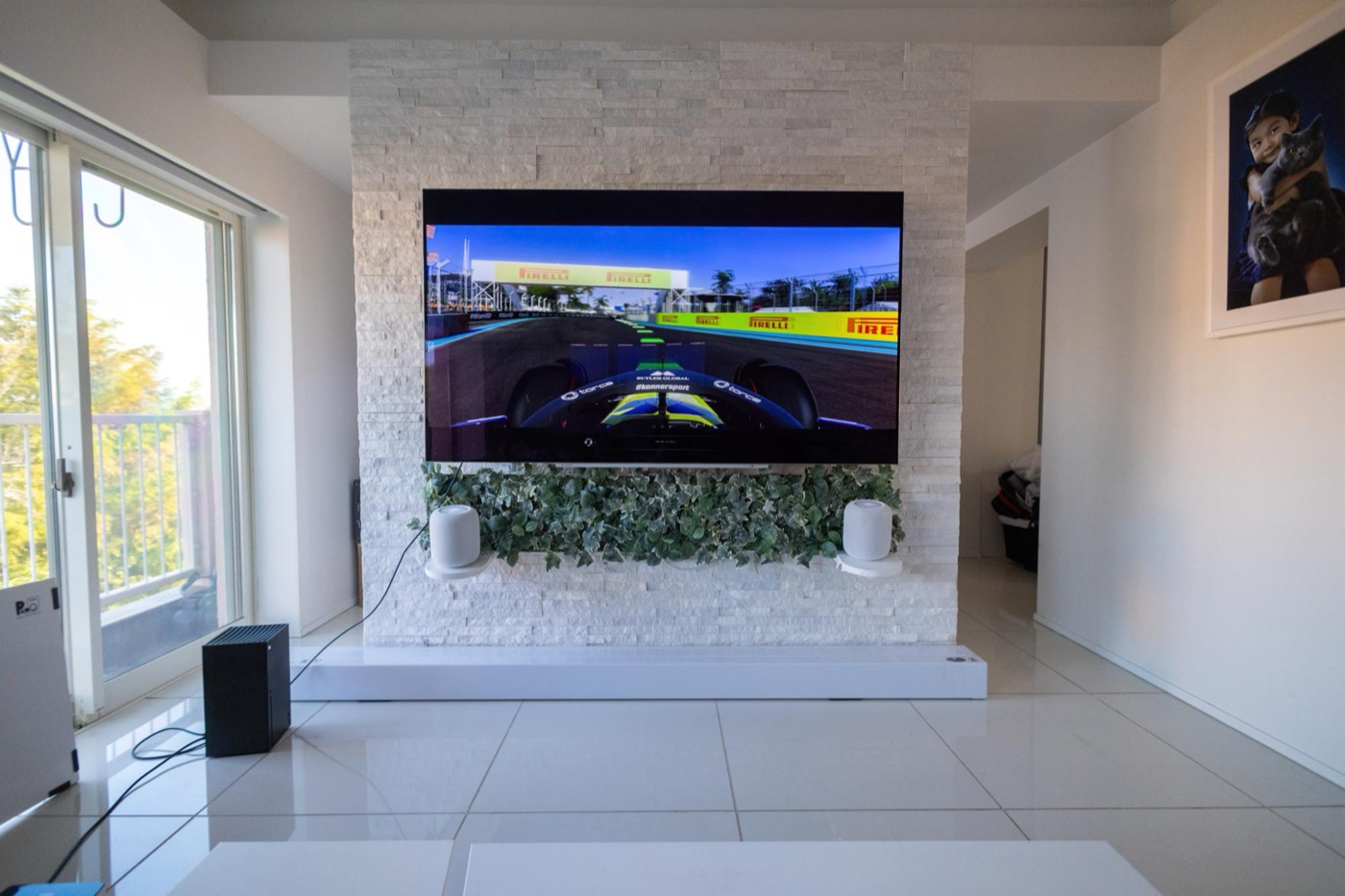
That said, compared to an OLED TV, the contrast between light and dark is lower. That’s a downside.
OLED clearly has stronger contrast between black and white
But a high-quality 100-inch TV is super expensive, and once it’s up, you lose that wall. If you want a big screen just in the bedroom for movies, or only want to go big when gaming, a projector and screen can be a great choice.
This sense of scale is what projectors are all about. If you want to create an out-of-the-ordinary space, I recommend a projector-and-screen combo
## In the dark, the ambient light–reducing screen crushes a white wall
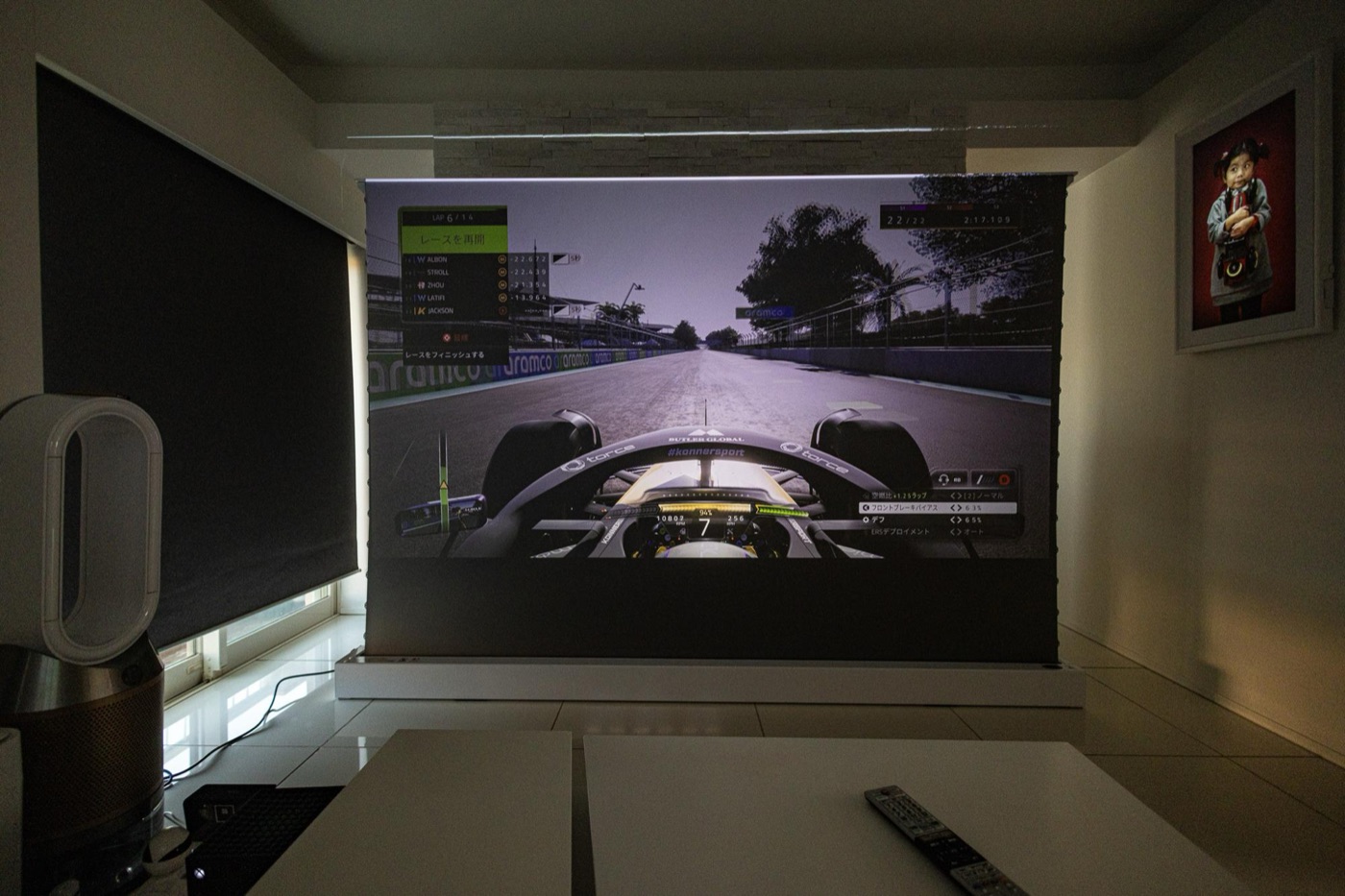
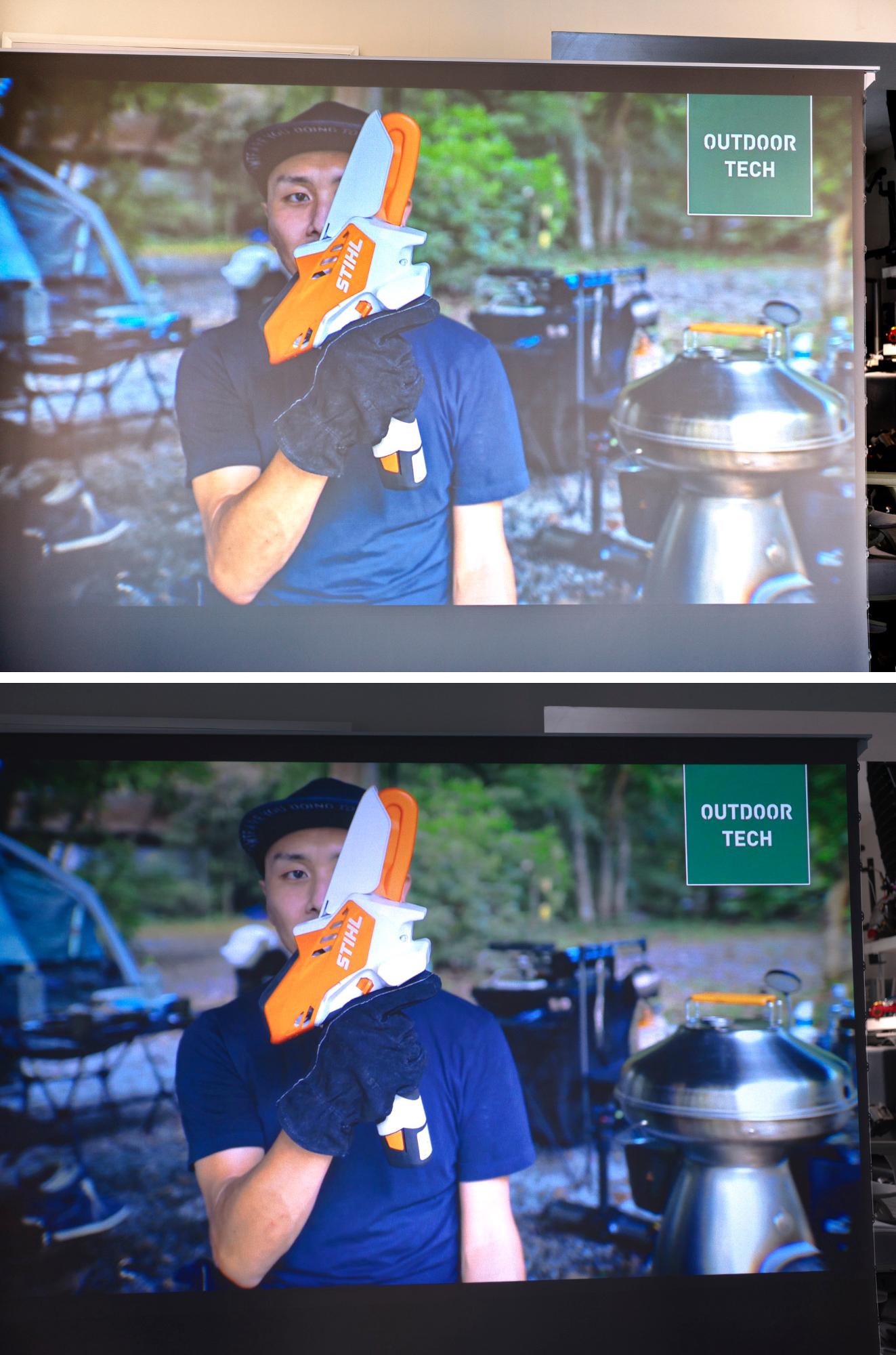
It looked good in a bright room with a little creativity, but the difference was clearer in the dark. This photo was taken during the day with the curtains closed, and compared to projecting on a white wall in the same conditions, the blacks are way deeper.
Deep blacks, with plenty of brightness in the whites tooMeanwhile, on a white wall at the same brightness, the contrast got this washed out
Because projectors work by throwing light, they can’t make black darker. If just making the screen gray tightens up blacks this much, that’s a great way to raise the projector’s potential.
Deep blacks without crushing — a really nice picture
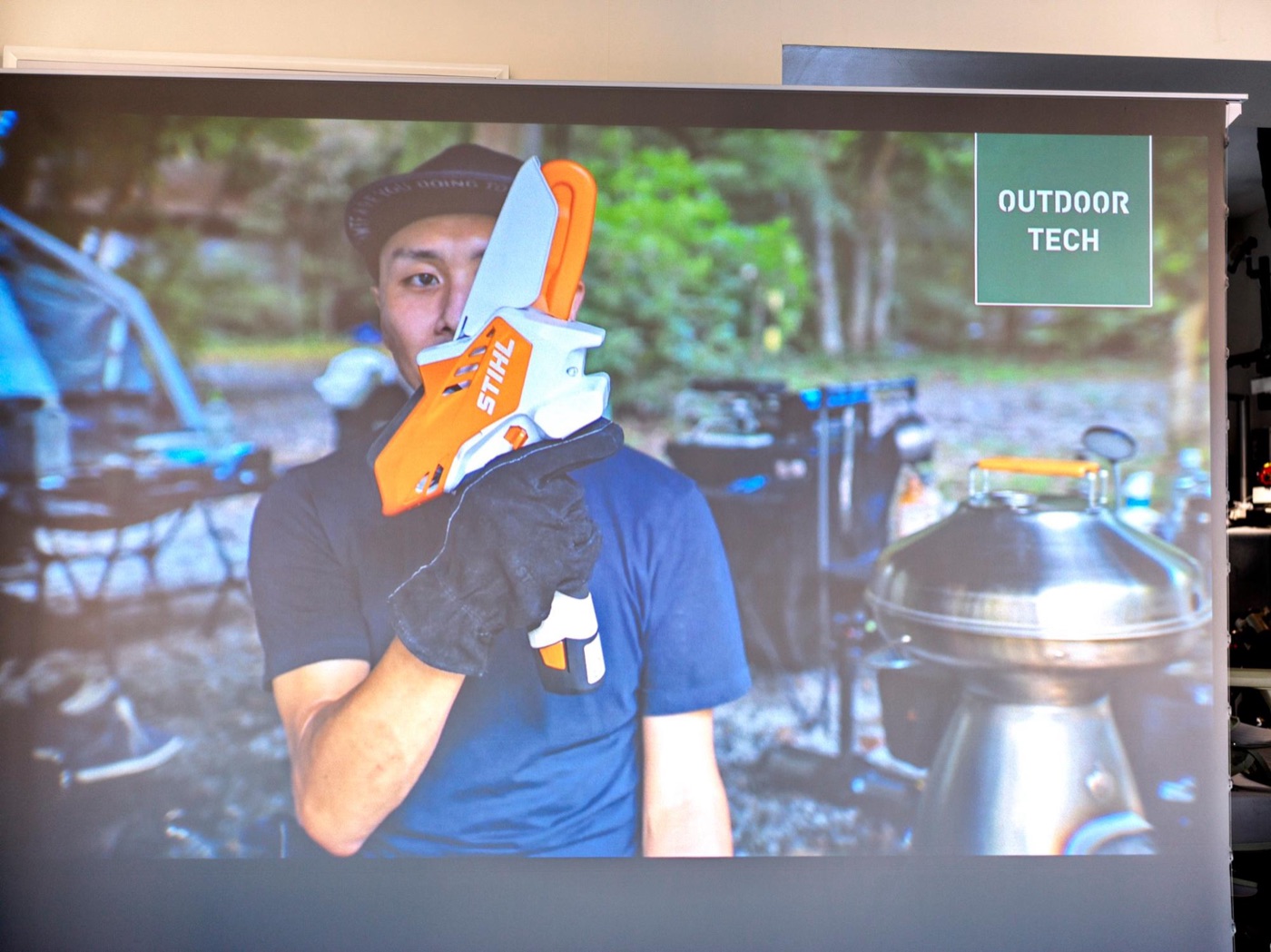
I also tested how much the screen’s color and material matter with the room still bright. The camping footage from earlier looks faint at first glance, but sticking a piece of white paper on the screen to compare makes the difference obvious.
You can see that where the white paper is, the darker colors are too faint and the picture feels lacking. It depends on the content and projector, but for value, pairing this ambient light–reducing screen with a projector around 2,000 ANSI lumens seems like a sweet spot.
Dark images really show the difference
## Well-thought-out features too
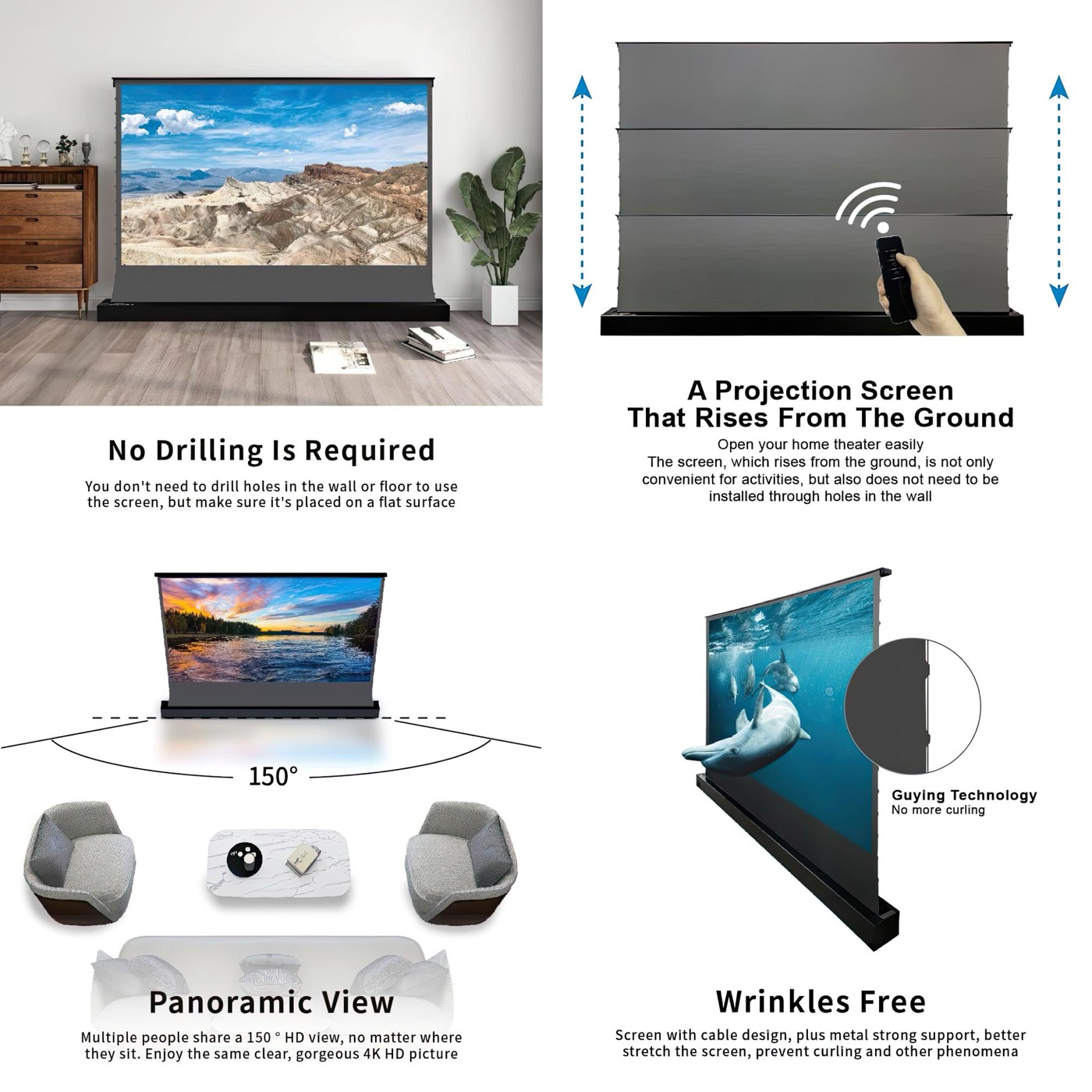
Picture quality improves as I described, but the other features are appealing too. Besides being motorized and floor-standing, it has a wide 150-degree viewing angle, and it rises up straight without the concave sag or wrinkles common on pop-up screens — you can tell it was designed from the user’s perspective.
It also comes with a remote, so you can control it from across the room, and with some creativity you can link it with smart speakers.
The only things that bugged me a little were the weight and height. It’s really heavy, so you need two or more people to set it up. The weight was inconvenient, but it also means it won’t tip over even without vertical legs, so that’s a trade-off. Placed on the floor it felt a little low, so I think it’s better on top of a TV stand.
Placing it at about this height is best
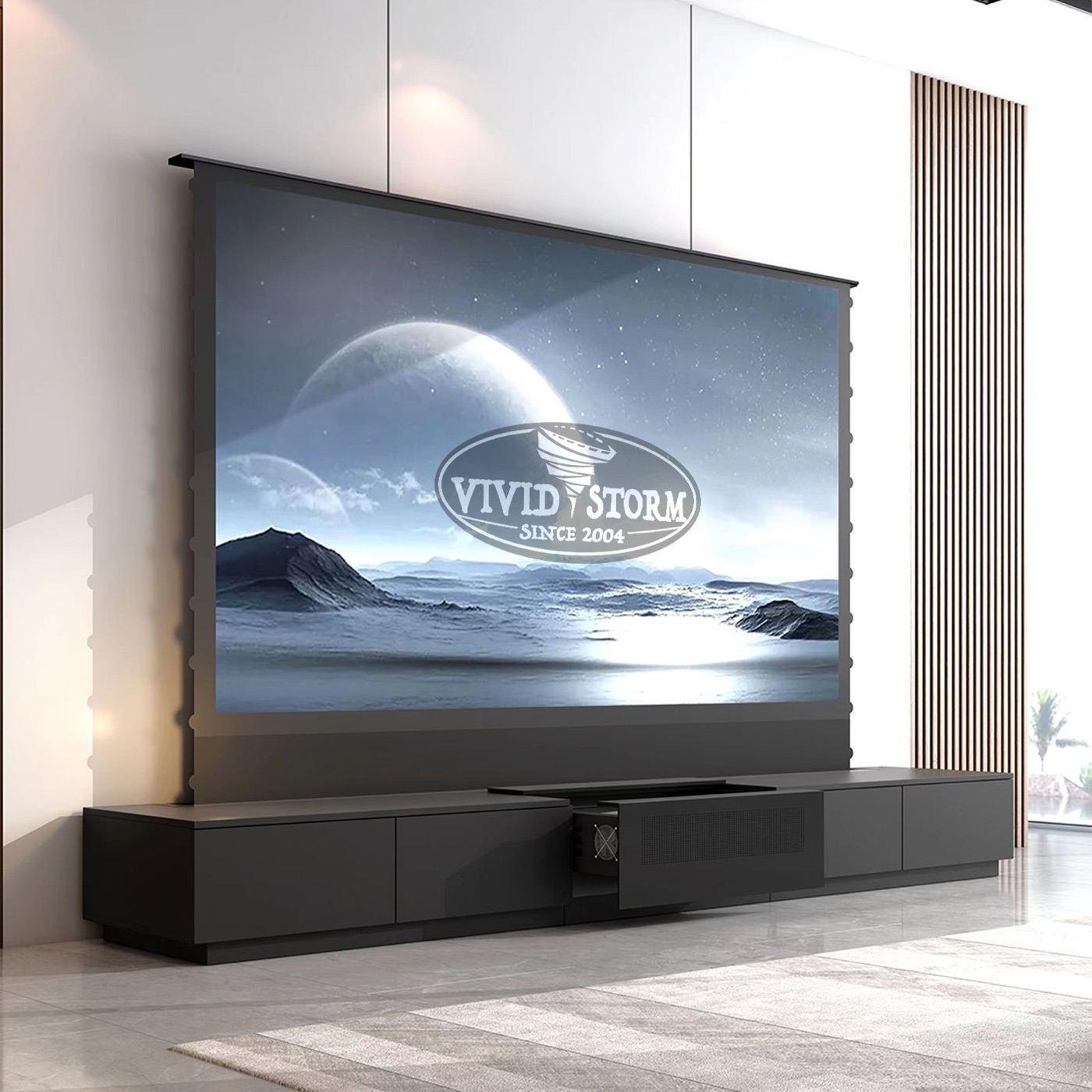
The product I covered is available in Japan, but what I’m eyeing even more is the cabinet type. The screen is built into a TV stand, so it looks even sleeker, and the cabinet holding the projector opens electrically. It’s also pretty pricey with the weak yen, but it’s worth considering if you’re building a new home. Honestly, I kind of want one (lol).
This cabinet-integrated type is the one I want most…
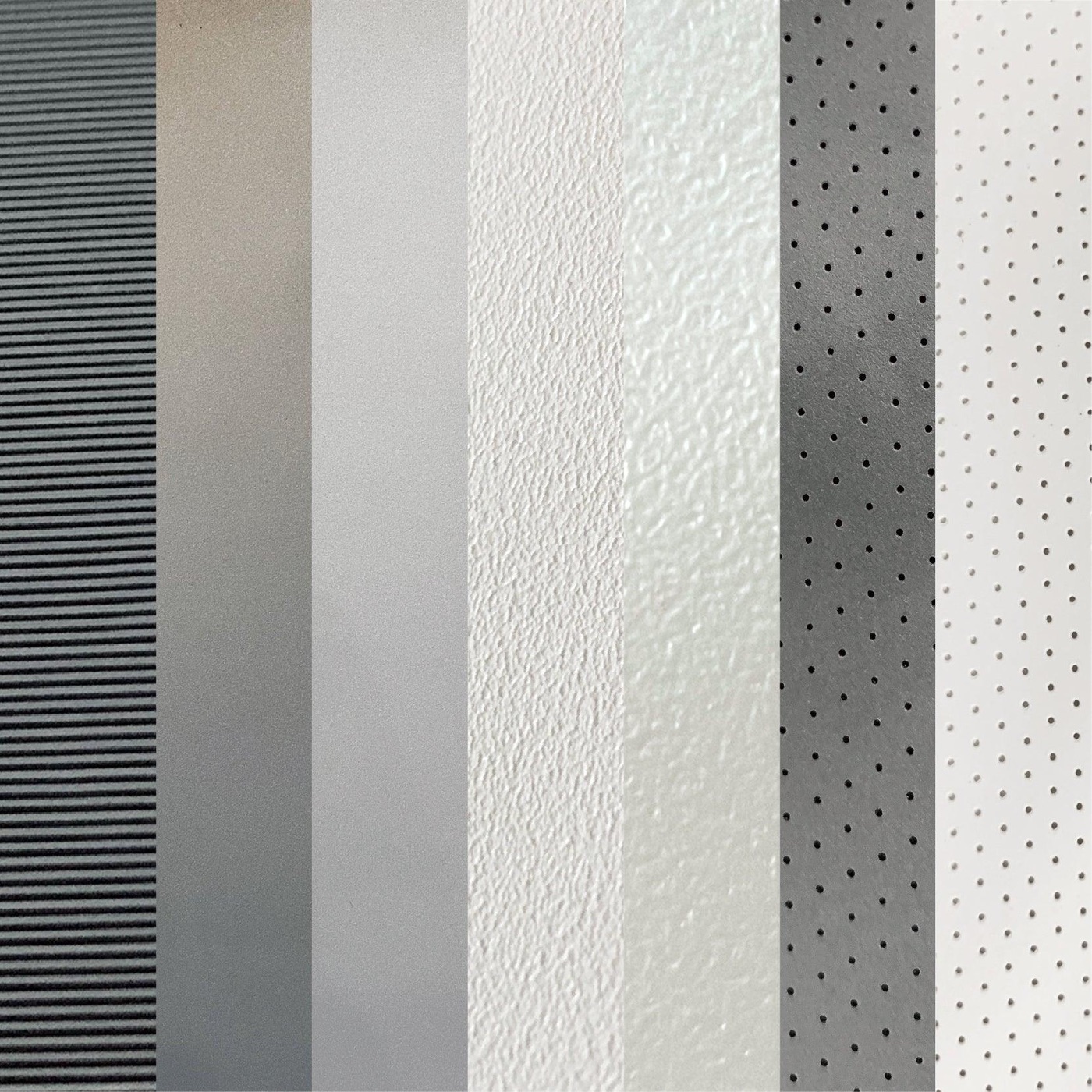
It’s a bit rough around the edges — there’s no safety stop feature, for example — but when it comes to showing a picture, it was really satisfying. If you’re interested, you can buy A4-size samples of the various screens on the **[official site](https://vividstormscreen.com/ja/products/vividstorm-screen-material-test-sample-around-a4-size)**, so ordering some and testing them with your projector is a good way to decide.
You can order samples of each screen material
**Official site: [VIVIDSTORM](https://vividstormscreen.com/ja)**
**Where to buy:**
VIVIDSTORM ambient light–rejecting laser projector screen (blocks light from above)VIVIDSTORM ambient light–reducing long-throw projector screen
As an Amazon Associate, Hidenori Kimura earns from qualifying purchases.